Enzyme Trypsin Is A Part Of Which Juice: B2B Process Guide
Learn why trypsin relates to pancreatic juice and how B2B teams specify trypsin enzyme for cell culture, digestion, diagnostics, QC, and scale-up.
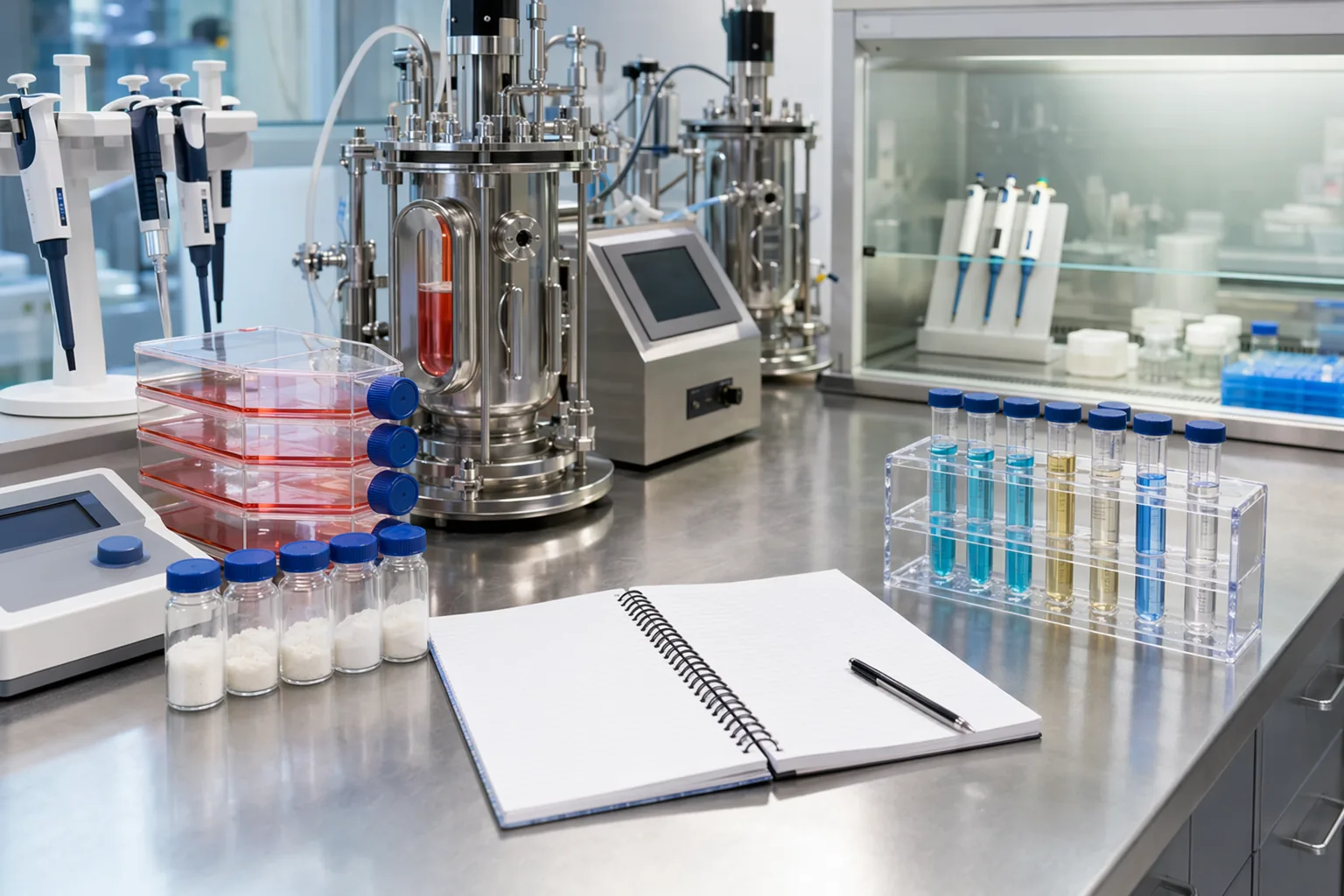
For industrial and life-science buyers, trypsin is more than a textbook protease. This guide connects the pancreatic-juice answer with practical sourcing, process design, QC, and scale-up decisions, and ends with what to send for a quote: product, quantity and destination.
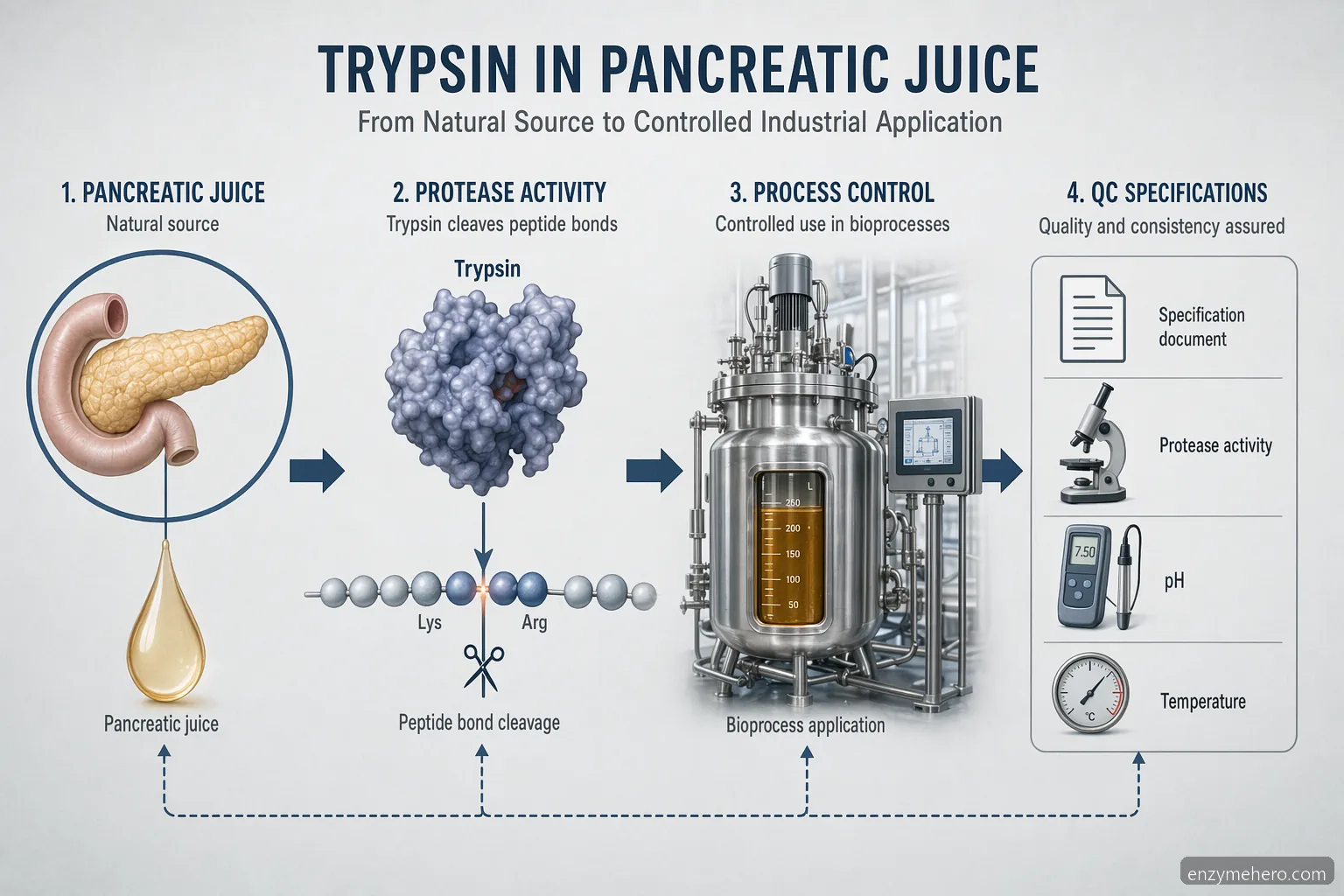
Which juice contains trypsin enzyme?
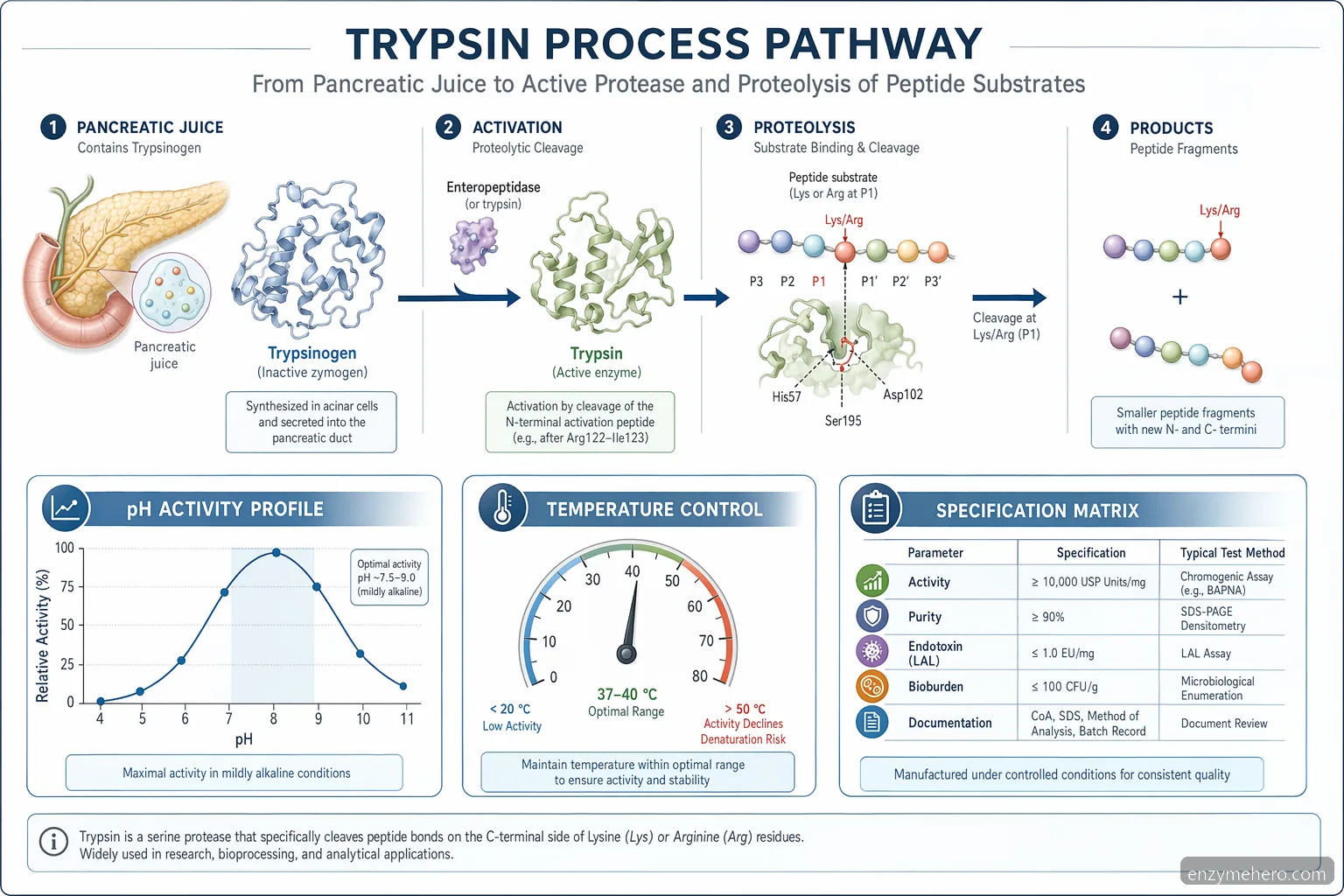
The direct answer to “enzyme trypsin is a part of which juice” is pancreatic juice, with an important technical distinction: the pancreas secretes trypsin mostly as the inactive zymogen trypsinogen. In the small intestine, enteropeptidase, also called enterokinase, converts trypsinogen to trypsin, and active trypsin can then activate additional trypsinogen. This is why the support question “trypsin enzyme is found in which juice” is commonly answered as pancreatic juice, not gastric juice. For procurement and process teams, the biological origin is only the starting point. Commercial trypsin may be animal-derived or recombinant trypsin, supplied as powder, frozen solution, or stabilized liquid. Specifications should focus on activity units, source traceability, impurity profile, microbial limits, formulation excipients, and suitability for cell culture, protein digestion, or diagnostics manufacturing.
Juice that contains trypsin enzyme: pancreatic juice after activation context. • Precursor form: trypsinogen. • Primary activator: enteropeptidase/enterokinase. • Commercial forms: animal-derived or recombinant.
How trypsin works in industrial bioprocessing
Trypsin is a serine protease that hydrolyzes peptide bonds mainly on the carboxyl side of lysine and arginine residues, unless neighboring sequence context restricts access. Therefore, the answer to “the enzyme trypsin digests which type of substance molecule” is proteins and peptides. In B2B use, that specificity supports controlled cell detachment, analytical peptide mapping, sample preparation, and diagnostic reagent workflows. Process performance depends on pH, temperature, ionic strength, substrate accessibility, enzyme-to-substrate ratio, and exposure time. Common working ranges include pH 7.5–8.5 and 20–37 °C, with colder handling used when slowing activity is required. Trypsin is not selected by headline price alone; it should be evaluated by cost-in-use, lot consistency, downstream compatibility, and failure risk. A lower-priced enzyme may increase scrap, rework, or assay variability if activity, purity, or formulation is inconsistent.
Is trypsin an enzyme? Yes, it is a proteolytic serine enzyme. • Main substrates: proteins and peptides. • Typical active pH: neutral to mildly alkaline. • Key buying metric: reproducible performance per batch, not only unit price.
Cell culture use: detachment without overexposure
For trypsin cell culture workflows, the enzyme is used to detach adherent cells by cleaving extracellular matrix and surface adhesion proteins. Typical process development evaluates 0.025–0.25% trypsin or equivalent activity-based dosing, often with EDTA where compatible, at 20–37 °C for approximately 1–10 minutes depending on cell line, surface area, confluency, and vessel format. Overexposure can reduce viability or alter surface markers, so pilot validation should define visual detachment endpoint, maximum contact time, neutralization method, and hold conditions. Buyers producing sensitive cultures often assess recombinant trypsin or animal-origin-free options to reduce source-related variability. QC checks may include activity assay, sterility or bioburden expectations, endotoxin where relevant, osmolality for ready-to-use solutions, and cell recovery performance against an approved reference lot.
Validate by cell line and vessel type. • Control contact time and neutralization. • Compare lots using recovery, viability, and morphology. • Request formulation details for EDTA, salts, and stabilizers.
Protein digestion and diagnostics applications
In protein digestion, trypsin enzyme is commonly used for controlled proteolysis before peptide analysis, protein characterization, or process-related impurity studies. Development teams often screen enzyme-to-substrate ratios around 1:20 to 1:100 w/w, pH 7.5–8.5, and 25–37 °C, then optimize incubation from minutes to overnight according to method requirements. In diagnostics manufacturing, trypsin may support reagent preparation, antigen processing, or sample treatment, but acceptable specifications are defined by the final assay and regulatory pathway. Important controls include digestion completeness, missed-cleavage rate, autolysis profile, interfering stabilizers, residual activity after quench, and matrix compatibility. Quenching may use acidification, inhibitors, heat, or dilution, but the selected approach must not compromise downstream assay readout. A technical data sheet should clearly state activity method, recommended storage, reconstitution instructions, and known incompatibilities.
Typical digestion pH: 7.5–8.5. • Typical digestion temperature: 25–37 °C. • Common screening ratio: 1:20 to 1:100 enzyme-to-substrate by weight. • Confirm quench compatibility with the final analytical or diagnostic method.
Specification, documents, and supplier qualification
A robust trypsin sourcing process starts with the COA, TDS, and SDS, then continues through pilot validation and supplier qualification. The COA should report lot-specific activity and relevant quality attributes, while the TDS should explain source, formulation, storage, reconstitution, and application guidance. The SDS supports safe handling, spill response, and worker training. For supplier qualification, request change-control practices, traceability, allergen or animal-origin statements where applicable, manufacturing consistency data, and complaint-response process. During pilots, compare candidate lots in the actual workflow rather than relying only on catalog activity units. Measure yield, cycle time, downstream assay impact, impurity carryover, operator handling, waste, and cost-in-use. For high-value cell culture or diagnostics operations, dual sourcing and incoming QC acceptance criteria can reduce supply and performance risk.
Required documents: COA, TDS, SDS. • Run pilot validation before production conversion. • Evaluate cost-in-use, not only purchase price. • Define incoming QC and change-notification expectations.
Clarifying common trypsin questions for buyers
Several search questions around trypsin come from biology education but still matter in technical purchasing. “Which enzyme converts trypsinogen to trypsin” and “trypsinogen is converted to trypsin by which enzyme” both point to enteropeptidase, with active trypsin also contributing autocatalytically. “Which is the odd enzyme trypsin carboxypeptidase pepsin chymotrypsin” is typically pepsin, because pepsin is a gastric protease active under acidic conditions, while trypsin, chymotrypsin, and carboxypeptidase are pancreatic proteases functioning mainly in the intestine. For B2B users, these distinctions inform pH selection, process compatibility, and enzyme inactivation strategy. Trypsin is generally inappropriate for acidic gastric-style conditions but effective in controlled neutral-to-alkaline workflows where proteolysis is desired and carefully stopped.
Activator answer: enteropeptidase, also called enterokinase. • Odd enzyme in the list: pepsin. • Reason: pepsin is gastric and acid-active. • Process implication: keep trypsin in validated neutral-to-alkaline conditions.
Technical Buying Checklist
Buyer Questions
Trypsin is associated with pancreatic juice. More precisely, the pancreas secretes inactive trypsinogen into pancreatic juice, and trypsinogen is converted to active trypsin in the small intestine. For industrial buyers, this biological fact helps explain why commercial trypsin is usually applied under neutral-to-mildly alkaline conditions rather than acidic gastric conditions.
Enteropeptidase, also called enterokinase, converts trypsinogen to trypsin at the intestinal brush border. After active trypsin is formed, it can also activate additional trypsinogen autocatalytically. In process language, this highlights the importance of controlling activation state, storage conditions, and exposure time when using trypsin enzyme in validated workflows.
Yes. Trypsin is a proteolytic serine enzyme that cleaves proteins and peptides, especially after lysine and arginine residues when the substrate is accessible. Industrial users specify trypsin by activity, purity, source, formulation, and application performance. It is used in cell culture detachment, protein digestion, analytical workflows, and selected diagnostics processes.
Pepsin is usually the odd enzyme in that list. Trypsin, chymotrypsin, and carboxypeptidase are pancreatic proteases that function mainly in intestinal conditions, while pepsin is a gastric protease active in acidic conditions. For B2B process design, this distinction matters because enzyme performance depends strongly on pH and matrix compatibility.
A qualified supplier should provide a lot-specific COA, technical data sheet, and safety data sheet. Depending on the application, buyers may also request origin information, animal-origin statements, change-control practices, microbial or endotoxin data, storage guidance, and stability information. Final approval should be based on pilot validation in the customer’s actual process.
Compare them by source traceability, lot consistency, impurity profile, formulation, supply reliability, and performance in the target workflow. Recombinant trypsin may be preferred where animal-origin risk reduction is important, while animal-derived material may fit established processes. The best choice should be confirmed by cost-in-use modeling and side-by-side pilot testing.
Related Search Themes
trypsin enzyme, trypsin enzyme is found in which juice, which enzyme converts trypsinogen to trypsin, which is the odd enzyme trypsin carboxypeptidase pepsin chymotrypsin, trypsinogen is converted to trypsin by which enzyme, the enzyme trypsin digests which type of substance molecule
Trypsin for Research & Industry
Need Trypsin for your lab or production process?
ISO 9001 certified · Food-grade & research-grade · Ships to 80+ countries
Frequently Asked Questions
Enzyme trypsin is a part of which juice?
Trypsin is associated with pancreatic juice. More precisely, the pancreas secretes inactive trypsinogen into pancreatic juice, and trypsinogen is converted to active trypsin in the small intestine. For industrial buyers, this biological fact helps explain why commercial trypsin is usually applied under neutral-to-mildly alkaline conditions rather than acidic gastric conditions.
Which enzyme converts trypsinogen to trypsin?
Enteropeptidase, also called enterokinase, converts trypsinogen to trypsin at the intestinal brush border. After active trypsin is formed, it can also activate additional trypsinogen autocatalytically. In process language, this highlights the importance of controlling activation state, storage conditions, and exposure time when using trypsin enzyme in validated workflows.
Is trypsin an enzyme?
Yes. Trypsin is a proteolytic serine enzyme that cleaves proteins and peptides, especially after lysine and arginine residues when the substrate is accessible. Industrial users specify trypsin by activity, purity, source, formulation, and application performance. It is used in cell culture detachment, protein digestion, analytical workflows, and selected diagnostics processes.
Which is the odd enzyme: trypsin, carboxypeptidase, pepsin, or chymotrypsin?
Pepsin is usually the odd enzyme in that list. Trypsin, chymotrypsin, and carboxypeptidase are pancreatic proteases that function mainly in intestinal conditions, while pepsin is a gastric protease active in acidic conditions. For B2B process design, this distinction matters because enzyme performance depends strongly on pH and matrix compatibility.
What documents should a trypsin supplier provide?
A qualified supplier should provide a lot-specific COA, technical data sheet, and safety data sheet. Depending on the application, buyers may also request origin information, animal-origin statements, change-control practices, microbial or endotoxin data, storage guidance, and stability information. Final approval should be based on pilot validation in the customer’s actual process.
How should buyers compare animal-derived and recombinant trypsin?
Compare them by source traceability, lot consistency, impurity profile, formulation, supply reliability, and performance in the target workflow. Recombinant trypsin may be preferred where animal-origin risk reduction is important, while animal-derived material may fit established processes. The best choice should be confirmed by cost-in-use modeling and side-by-side pilot testing.
Request a Trypsin Quote
To get a quote, send the product (grade and source), the quantity and the destination country. Turn this guide into a supplier brief: request a technical trypsin consultation, COA/TDS/SDS review, and pilot-scale sampling plan for your process. See our application page for Trypsin Enzyme for Reliable Cell Harvesting for specs, MOQ, and a free 50 g sample.
Contact Us to Contributehello@mail.enzymehero.com