Juice That Contains Trypsin Enzyme: How to Use Trypsin in Juice Formulations
B2B guide to trypsin enzyme use in juice formulations: pH, temperature, dosage, QC, COA/TDS/SDS, pilot validation, and supplier checks.
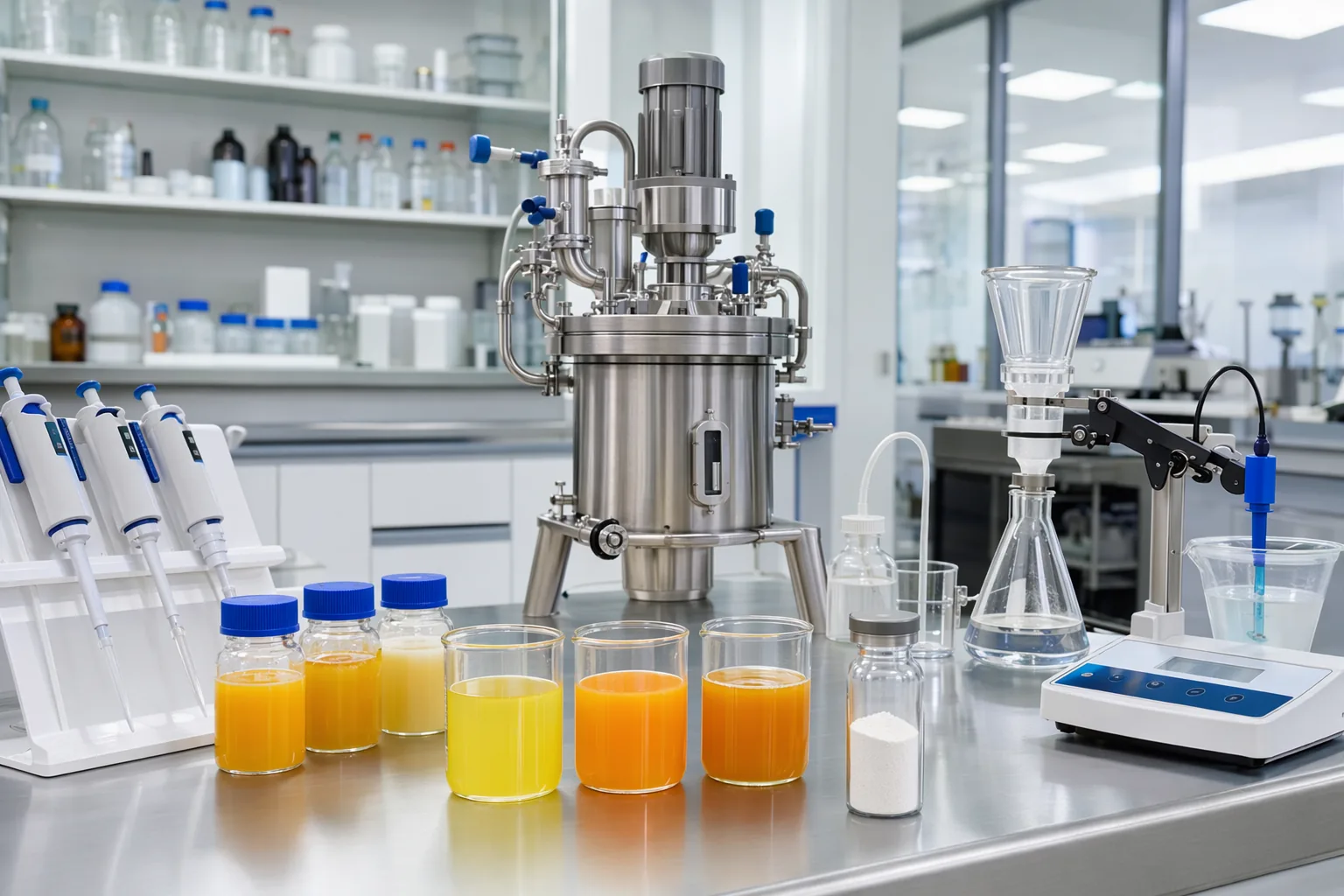
For beverage and ingredient manufacturers, trypsin can be used as a controlled protease in juice-based formulations, protein hydrolysate drinks, and diagnostic or processing applications where validated digestion performance matters; to get a quote, send the product, quantity and destination.
What a Juice That Contains Trypsin Enzyme Really Means
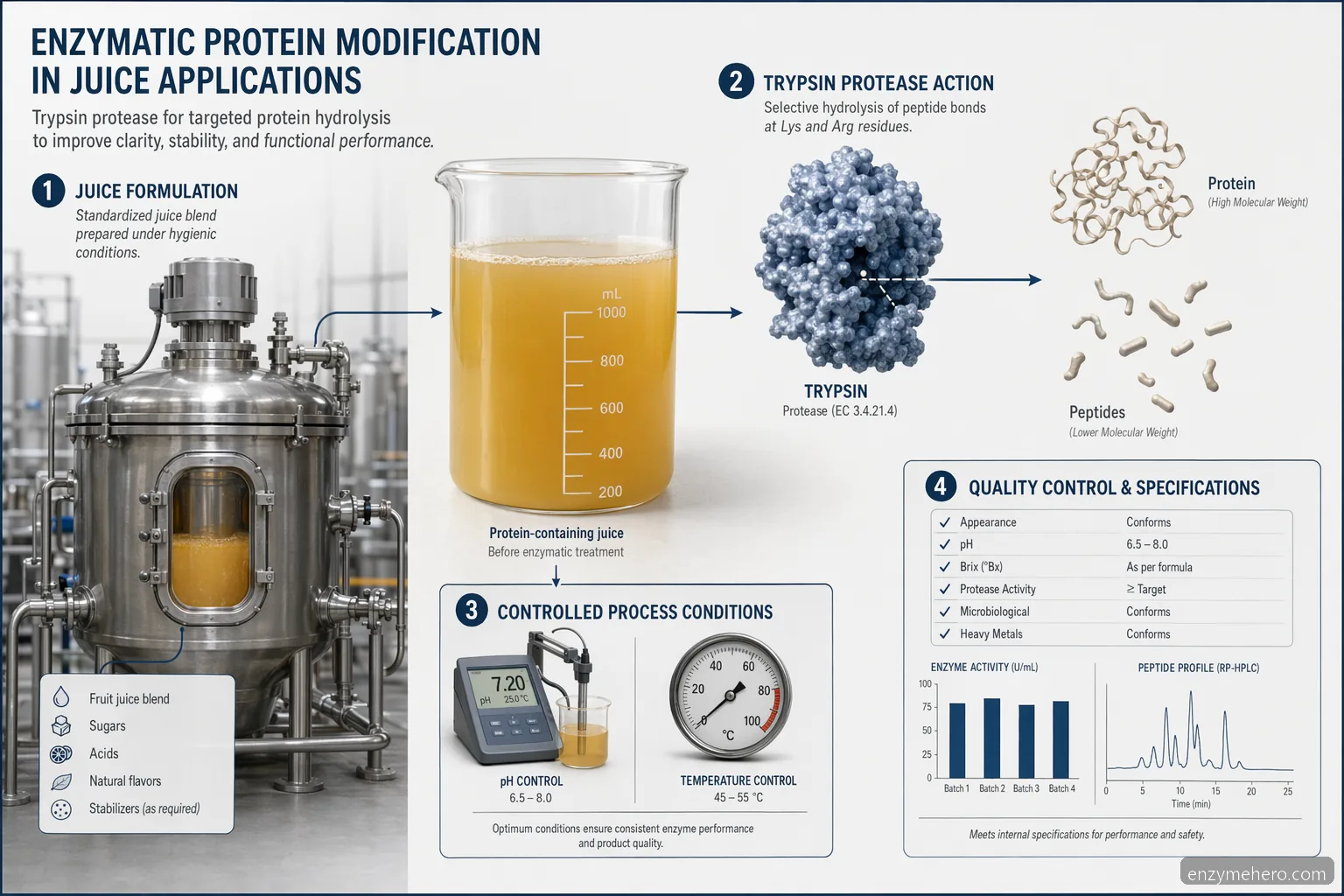
In B2B formulation, a juice that contains trypsin enzyme is usually not positioned as a health supplement claim. It is better understood as a juice-based process stream, beverage base, or protein-containing formulation where trypsin is used to hydrolyze proteins under controlled manufacturing conditions. Trypsin is an enzyme that hydrolyzes peptide bonds, especially after lysine and arginine residues, making it useful for protein digestion, peptide preparation, and certain analytical workflows. However, common fruit juices are acidic, often around pH 3.0-4.5, while trypsin enzyme typically performs best around pH 7.5-8.5. That mismatch is the main technical challenge. Manufacturers may use buffered juice blends, neutralized protein phases, or pre-digestion steps before acidification. If buyers ask, “is trypsin an enzyme that digests protein,” the answer is yes, but the processing environment determines whether it works efficiently.
Best suited for controlled processing, not unsupported consumer health claims. • Useful where protein digestion or peptide generation is required. • Acidic juice may reduce trypsin activity unless the process is adjusted.
Process Conditions for Trypsin in Juice-Based Systems
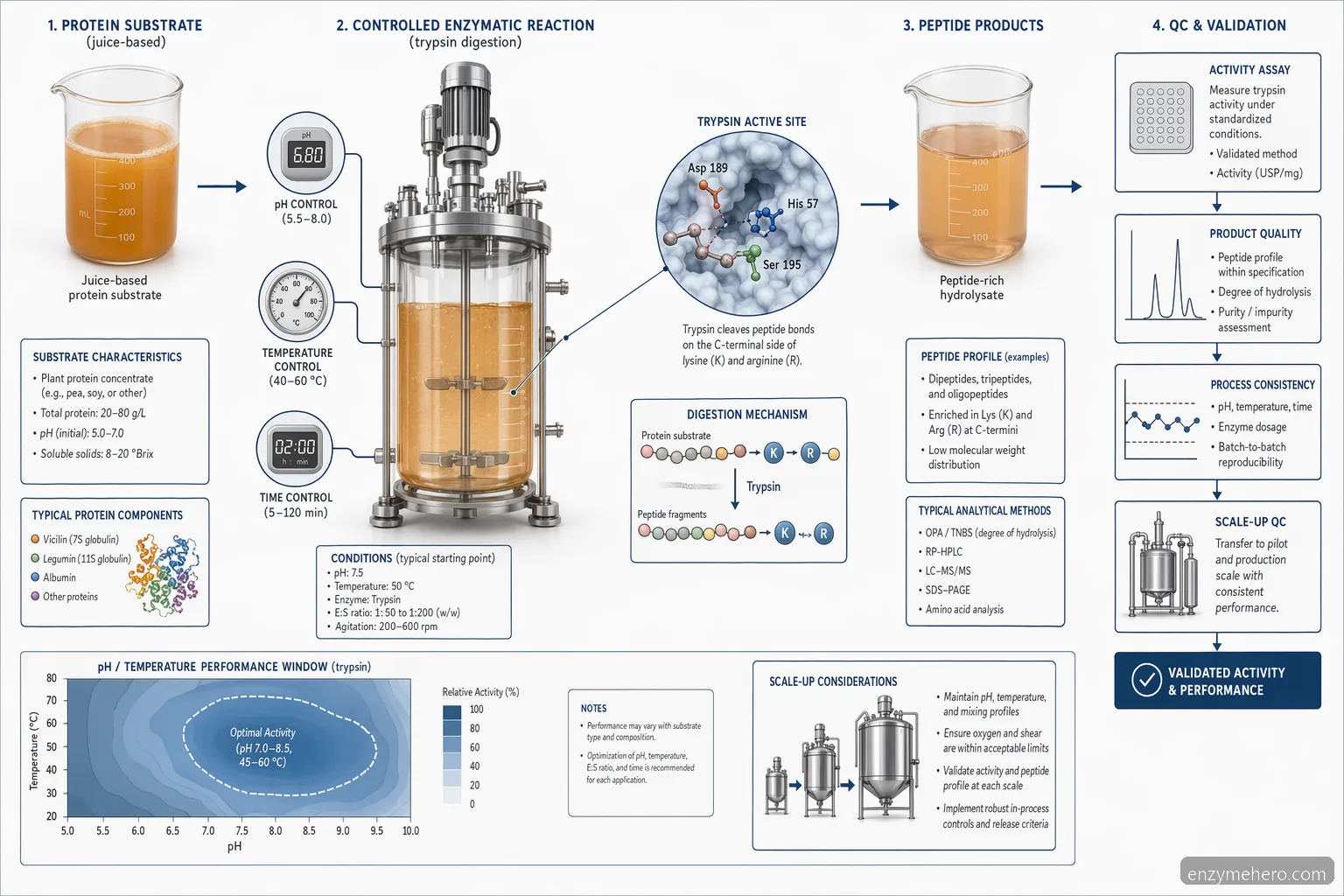
For formulation trials, start with the supplier’s TDS and then build a design-of-experiments around pH, temperature, contact time, and substrate load. A typical screening range is pH 7.0-8.5, 25-37°C, and 15-120 minutes, depending on the protein substrate and target degree of hydrolysis. Some processes may run cooler for better flavor control or warmer for faster digestion, provided enzyme stability and microbial risk are managed. Dosage should be based on activity units, not simply weight percentage. Early lab trials may screen broad bands such as 0.01-0.20% enzyme preparation by substrate weight, then refine to a cost-in-use target. After digestion, formulators commonly lower pH, heat treat, filter, or otherwise validate inactivation. A final acidic juice may not retain meaningful active trypsin unless specifically designed and verified.
Screen pH 7.0-8.5 before final acidification. • Track temperature, time, and enzyme activity units. • Validate residual activity after heat, pH shift, or filtration.
Selecting Recombinant Trypsin or Other Commercial Grades
Industrial buyers should compare recombinant trypsin, animal-origin trypsin, and specialty low-impurity grades according to application risk. Recombinant trypsin can be attractive where defined origin, traceability, and consistency are priorities, while other commercial grades may be suitable for lower-risk processing where specifications align with the intended use. For cell culture, diagnostics, and protein digestion workflows, tighter controls may be required than for general process development. Ask whether the enzyme is supplied as powder, liquid, immobilized format, or sterile-filtered solution, and confirm compatible excipients. Review the COA for activity, identity, purity, moisture or solids, microbial limits where applicable, and lot number. The TDS should describe handling and recommended conditions, while the SDS should cover safe storage and workplace controls. Avoid assuming that “trypsin enzyme is found in which juice” has a natural formulation answer; commercial trypsin is normally added intentionally.
Confirm source: recombinant, animal-derived, or other defined origin. • Match grade to beverage, diagnostic, cell culture, or analytical use. • Request COA, TDS, SDS, and traceability documentation.
Quality Control Checks Before Scale-Up
A successful juice that contain trypsin enzyme concept needs analytical controls before plant trials. Measure pH before and after enzyme addition, soluble protein, peptide profile, turbidity, viscosity, Brix, acidity, color, and sensory impact. For protein digestion, degree of hydrolysis or peptide mapping may be more useful than a simple total protein result. If the product will be heat treated, validate the actual time-temperature profile against residual trypsin activity, not just the set point. Haze and sediment testing are important because hydrolyzed proteins can interact with polyphenols, minerals, or stabilizers in juice. Microbiological controls should reflect the full process, especially if neutral pH hold steps are introduced. Retain samples from pilot batches for stability testing under refrigerated, ambient, and accelerated conditions as appropriate to the commercial format.
Verify residual activity after inactivation steps. • Monitor haze, sediment, peptide profile, and sensory changes. • Control microbial risk during neutral pH processing.
Cost-in-Use and Supplier Qualification
For procurement teams, the lowest price per kilogram may not deliver the lowest cost-in-use. Compare suppliers by activity units per gram, digestion speed, required dosage, yield improvement, waste reduction, filtration performance, storage stability, and batch-to-batch variation. A more concentrated trypsin enzyme may reduce handling and freight costs, while a cleaner grade may lower downstream filtration or QC burden. Supplier qualification should include sample evaluation, documentation review, change-control expectations, lead time, packaging suitability, and technical support responsiveness. Ask for representative lots for pilot validation and confirm whether future commercial lots will be manufactured to comparable specifications. Because trypsin is an enzyme that breaks down proteins, even small process deviations can change peptide profile and taste. Commercial approval should be based on validated performance in your actual juice matrix, not only on catalog activity.
Compare cost per functional activity unit, not only price per kilogram. • Pilot at realistic substrate concentration and processing scale. • Qualify documentation, logistics, change control, and support.
Technical Buying Checklist
Buyer Questions
Yes. Trypsin is an enzyme that digests protein by hydrolyzing peptide bonds, especially at specific amino acid sites. In industrial settings it is used for protein digestion, cell culture detachment workflows, diagnostics, and analytical sample preparation. For juice formulations, its performance depends strongly on pH, temperature, contact time, and the protein substrate.
The question “trypsin enzyme is found in which juice” is often misleading for industrial formulation. Trypsin is primarily known as a digestive protease, not as a typical natural fruit juice enzyme. In commercial beverage or ingredient processing, trypsin is normally added as a controlled enzyme ingredient or processing aid, then validated for performance and residual activity.
Trypsin generally works best near neutral to mildly alkaline pH, often around pH 7.5-8.5, while many fruit juices are much more acidic. Direct addition to acidic juice may give poor activity. Manufacturers often digest the protein phase at adjusted pH first, then acidify, blend, heat treat, or filter according to the final product design.
Evaluate suppliers by activity units, source, grade, lot consistency, documentation, technical support, and cost-in-use. Request COA, TDS, SDS, representative samples, storage guidance, and change-control expectations. Pilot validation should be performed in the actual juice matrix because enzyme activity, flavor impact, haze, and residual activity can differ significantly from standard laboratory assays.
Recombinant trypsin may be suitable when defined origin, traceability, and consistency are important, but suitability depends on the application, regulatory pathway, and supplier specifications. Buyers should confirm intended-use statements, excipients, activity assay, microbial controls, and compatibility with the process. No trypsin grade should be approved for commercial use without pilot-scale validation and documentation review.
Trypsin for Research & Industry
Need Trypsin for your lab or production process?
ISO 9001 certified · Food-grade & research-grade · Ships to 80+ countries
Frequently Asked Questions
Is trypsin an enzyme?
Yes. Trypsin is an enzyme that digests protein by hydrolyzing peptide bonds, especially at specific amino acid sites. In industrial settings it is used for protein digestion, cell culture detachment workflows, diagnostics, and analytical sample preparation. For juice formulations, its performance depends strongly on pH, temperature, contact time, and the protein substrate.
What juice naturally contains trypsin enzyme?
The question “trypsin enzyme is found in which juice” is often misleading for industrial formulation. Trypsin is primarily known as a digestive protease, not as a typical natural fruit juice enzyme. In commercial beverage or ingredient processing, trypsin is normally added as a controlled enzyme ingredient or processing aid, then validated for performance and residual activity.
Can trypsin work in acidic fruit juice?
Trypsin generally works best near neutral to mildly alkaline pH, often around pH 7.5-8.5, while many fruit juices are much more acidic. Direct addition to acidic juice may give poor activity. Manufacturers often digest the protein phase at adjusted pH first, then acidify, blend, heat treat, or filter according to the final product design.
How should manufacturers choose a trypsin enzyme supplier?
Evaluate suppliers by activity units, source, grade, lot consistency, documentation, technical support, and cost-in-use. Request COA, TDS, SDS, representative samples, storage guidance, and change-control expectations. Pilot validation should be performed in the actual juice matrix because enzyme activity, flavor impact, haze, and residual activity can differ significantly from standard laboratory assays.
Is recombinant trypsin suitable for juice formulation work?
Recombinant trypsin may be suitable when defined origin, traceability, and consistency are important, but suitability depends on the application, regulatory pathway, and supplier specifications. Buyers should confirm intended-use statements, excipients, activity assay, microbial controls, and compatibility with the process. No trypsin grade should be approved for commercial use without pilot-scale validation and documentation review.
Request a Trypsin Quote
To get a quote, send the product (grade and source), the quantity and the destination country. Turn this guide into a supplier brief: request a trypsin enzyme sample, COA/TDS/SDS package, and pilot formulation support for your juice-based process. See our application page for Trypsin Enzyme for Reliable Cell Harvesting for specs, MOQ, and a free 50 g sample.
Contact Us to Contributehello@mail.enzymehero.com