Proteolytic Enzymes Trypsin: Supplier Guide for Cell Culture
Source proteolytic enzymes trypsin for cell culture with guidance on specs, QC, COA/TDS/SDS, pilot validation, dosage, and supplier qualification.
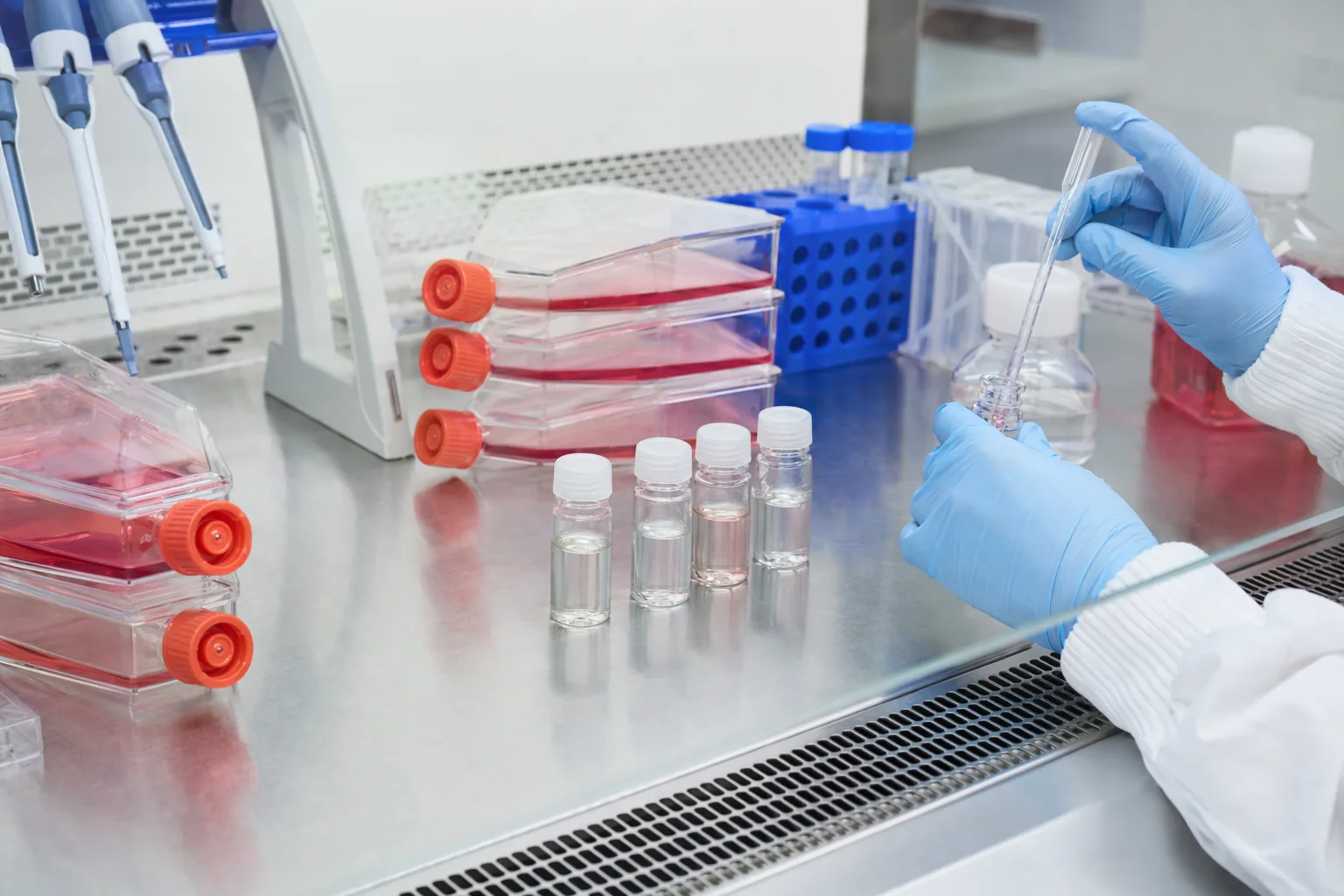
A practical B2B sourcing guide for selecting trypsin enzyme products used in adherent cell culture, passaging, protein digestion workflows, and regulated diagnostics manufacturing.
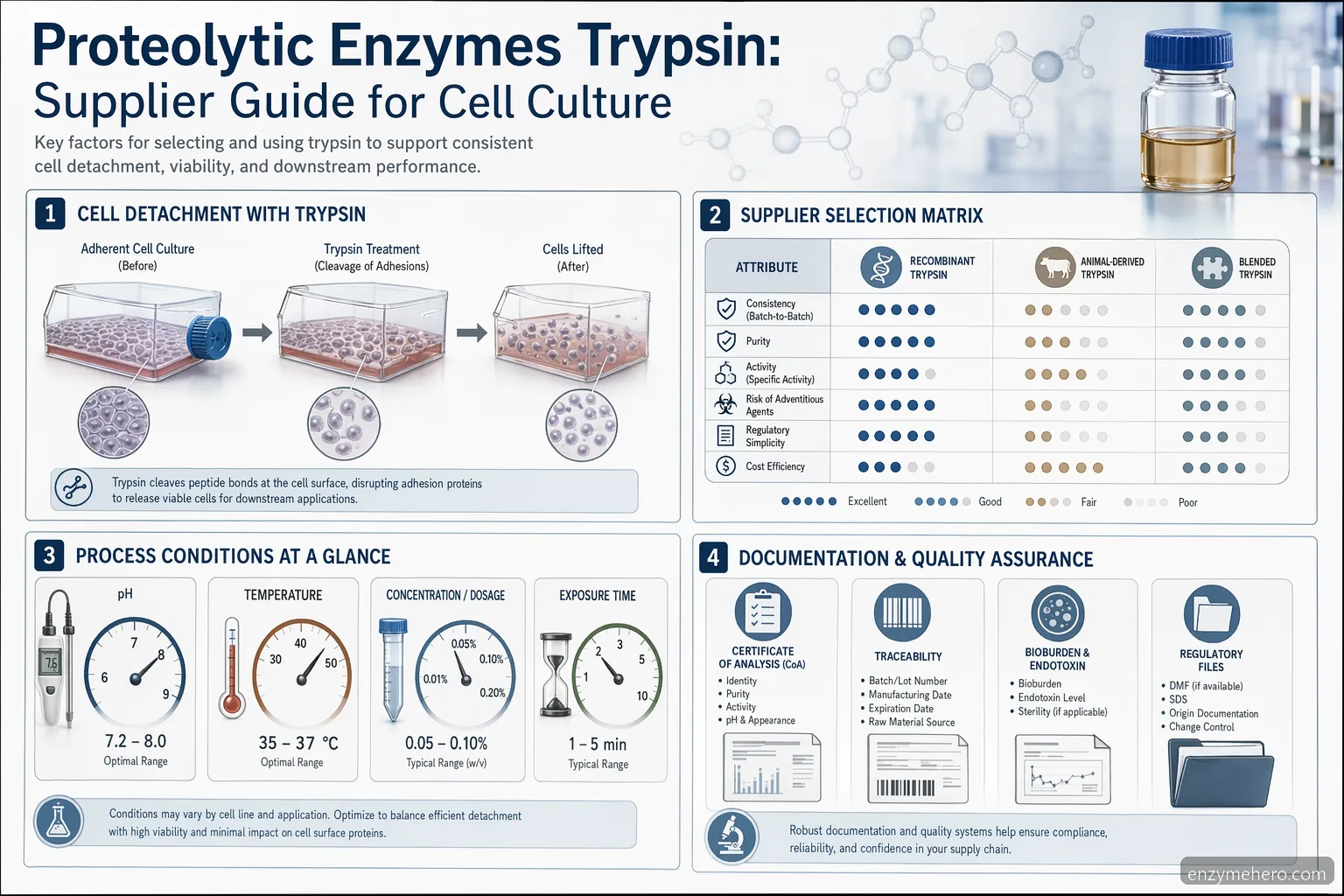
Why buyers specify proteolytic enzymes trypsin
Proteolytic enzymes trypsin are serine proteases widely used to detach adherent cells, dissociate tissues, prepare protein samples, and support selected diagnostic workflows. In cell culture, the purchasing decision is not simply whether enzymes trypsin can cleave proteins; it is whether a defined trypsin enzyme grade performs consistently without damaging cell viability, phenotype, or downstream assay results. Buyers typically compare porcine-derived trypsin, modified trypsin, and recombinant trypsin based on origin, risk profile, activity units, impurity limits, and documentation depth. For routine passaging, a stable liquid or frozen format may reduce preparation labor, while lyophilized material can improve storage flexibility for manufacturing sites. If your operation supports GMP-like production, diagnostics, or cell-based QC, prioritize traceability, lot history, supplier change notification, and technical support. The right specification should connect enzyme activity to your process outcome: reproducible detachment, high viable recovery, and predictable neutralization.
Primary buyer criteria: performance, documentation, consistency, and supply continuity. • Common formats: lyophilized powder, frozen solution, liquid solution, and trypsin-EDTA blends. • Key use case for this page: cell culture passaging and dissociation.
Cell culture process conditions and dosage bands
For adherent cell culture, trypsin enzyme performance depends on concentration, temperature, pH, exposure time, calcium and magnesium levels, and how quickly the enzyme is neutralized. Many passaging workflows use 0.025-0.25% w/v trypsin, often with EDTA, at pH 7.2-8.0 and 20-37°C. Sensitive lines may require lower concentration, room-temperature exposure, or shorter contact times, while robust lines may detach efficiently at 37°C within a few minutes. A practical validation screen should test at least three dose levels and two exposure times, then measure viable cell recovery, aggregate level, morphology after reseeding, growth rate, and marker retention if relevant. Overexposure can reduce membrane proteins and impair attachment, so set a defined endpoint and neutralize with serum-containing medium, defined inhibitor, or validated wash step. Record vessel type, confluence, rinse conditions, and mixing method because these variables often explain lot-to-lot performance differences.
Typical pH: 7.2-8.0 for cell culture detachment. • Typical temperature: ambient to 37°C, depending on cell sensitivity. • Typical screening band: 0.025-0.25% w/v trypsin or activity-equivalent dosage. • QC readouts: viability, recovery, morphology, growth curve, and assay compatibility.
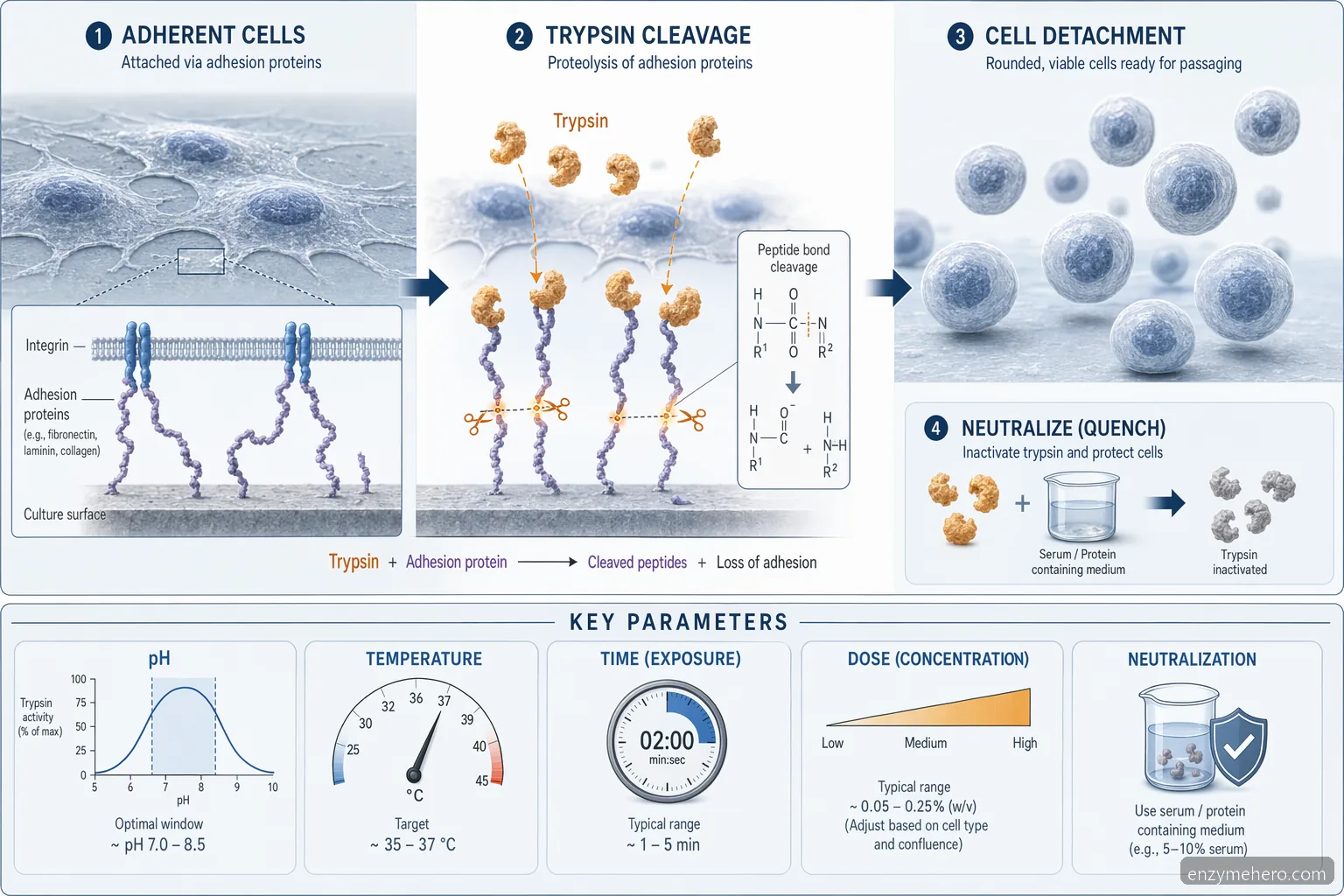
Choosing recombinant trypsin, animal-derived trypsin, or blends
Recombinant trypsin is often selected when buyers want animal-origin-free sourcing, lower adventitious-agent risk, and clearer traceability. Animal-derived trypsin can be economical and familiar in legacy cell culture processes, but it requires careful review of origin, viral risk mitigation statements, impurity profile, and supply chain controls. Some applications use proteolytic enzymes trypsin chymotrypsin blends for stronger tissue dissociation or specialized protein digestion; however, blends may be less suitable when a defined cleavage profile is required. For sequencing and proteomics, proteolytic enzymes trypsin chymotrypsin sequencing workflows demand tighter specificity, low autolysis, and contaminant control than routine passaging. If your search includes buy proteolytic enzymes trypsin chymotrypsin, confirm whether the supplier offers separate enzymes, validated blends, or custom activity ratios. For cell culture, do not substitute chymotrypsin-containing products unless your process has been tested for cell surface marker preservation and downstream assay impact.
Recombinant trypsin supports animal-origin-free process design. • Animal-derived trypsin may fit cost-sensitive established workflows. • Trypsin-chymotrypsin blends require application-specific validation. • Sequencing-grade needs differ from cell culture-grade requirements.
Documentation to request from a trypsin supplier
A qualified supplier should provide more than a catalog description. Request a current Certificate of Analysis, Technical Data Sheet, and Safety Data Sheet for each trypsin enzyme product under consideration. The COA should identify lot number, activity method, activity result, appearance, pH or solution parameters where applicable, microbial limits when offered, and any stated purity or impurity tests. For cell culture applications, ask whether endotoxin, bioburden, sterility, mycoplasma, residual host cell protein, or residual DNA testing is available for the specific grade. The TDS should explain storage temperature, reconstitution instructions, stability, recommended working concentration, and compatibility limits. The SDS should support EHS review for handling, dust control, spill response, and disposal. For regulated or long-term manufacturing use, also discuss change notification, shelf-life assignment, retest policy, packaging options, lead time, and whether reserved lots or supply agreements are available.
COA: lot-specific activity and QC results. • TDS: handling, storage, stability, and usage guidance. • SDS: EHS handling and risk controls. • Supplier file: change control, traceability, and lead-time expectations.
Pilot validation and cost-in-use
The lowest unit price rarely identifies the best industrial enzyme choice. Cost-in-use for trypsin enzymes includes required dose, handling time, thaw or reconstitution losses, filtration needs, discard rate, batch failures, documentation burden, and inventory risk. A pilot validation should compare candidate lots in your actual vessels, cell density, rinse buffer, media, temperature, and neutralization method. Use a structured protocol with predefined acceptance criteria such as detachment time, viable recovery, post-passage doubling time, aggregate percentage, morphology score, and downstream assay signal. Include at least one stress condition, such as upper hold time or lower operating temperature, to reveal process robustness. If recombinant trypsin costs more per vial but reduces qualification burden, lot variability, or rejection risk, it may be lower cost at production scale. Capture labor, consumables, waste, and retesting in the evaluation so procurement, process development, and quality teams can reach the same conclusion.
Compare cost per successful passage, not only cost per unit. • Validate with actual cell line, vessel, media, and neutralization method. • Set acceptance criteria before testing supplier samples. • Include documentation and supply risk in total cost.
Supplier qualification checklist for industrial buyers
Before placing a production order, qualify the supplier against technical, quality, and commercial requirements. Confirm that the company can provide consistent trypsin enzyme activity, clear specification limits, responsive technical support, and realistic lead times. Review lot history when available and ask how raw material changes, process changes, testing changes, and packaging changes are communicated. For multi-site manufacturing, verify whether the same grade and package size can be supplied across regions with aligned documentation. Commercial terms should support your forecast, minimum order quantity, emergency supply needs, and sample availability for incoming QC. If your process requires animal-origin-free materials, ensure the claim is supported by supplier documentation rather than marketing wording alone. A good trypsin supplier will help translate enzyme specifications into operating parameters, recommend pilot quantities, and support deviation investigations without making unsupported performance guarantees.
Confirm technical fit, documentation depth, and supply continuity. • Ask for lot history and change-notification practices. • Align MOQ, lead time, packaging, and forecast requirements. • Qualify claims such as recombinant or animal-origin-free with documentation.
Technical Buying Checklist
Buyer Questions
In cell culture, proteolytic enzymes trypsin are mainly used to detach adherent cells from treated plastic or microcarriers by cleaving cell-surface and matrix proteins. Buyers use them for routine passaging, scale-up, dissociation, and preparation for assays. Performance should be judged by detachment time, viable recovery, morphology, growth after reseeding, and compatibility with downstream testing.
Compare trypsin enzyme grades by activity assay, origin, formulation, impurity profile, microbial controls, documentation, and supply reliability. For cell culture, also compare endotoxin or bioburden data when available, storage format, shelf life, and neutralization requirements. Always test candidate grades in your own process because cell line sensitivity, confluence, vessel type, and media system can change results.
Not automatically. Trypsin-like proteolytic enzymes may share cleavage preference after lysine or arginine residues, but their purity, specificity, activity profile, stability, and cell culture effects can differ. A substitute may change detachment speed, cell-surface marker retention, or protein digestion outcomes. Treat any replacement as a process change and validate performance against your current trypsin enzyme lot.
In biochemical systems, trypsin can activate certain protease zymogens, including chymotrypsinogen to chymotrypsin, by limited proteolysis. This concept is important when discussing proteolytic enzymes trypsin chymotrypsin, but it is not usually the goal in cell culture passaging. For production processes, focus on controlled detachment and rapid neutralization rather than unintended activation of other proteases.
Choose recombinant trypsin when animal-origin-free sourcing, defined manufacturing history, and reduced animal-derived risk are priorities. It is often useful for diagnostics manufacturing, cell therapy support workflows, and companies standardizing global raw materials. The decision should still include pilot validation, COA review, cost-in-use analysis, and confirmation that the supplier can support documentation and ongoing supply.
Incoming QC depends on your risk level, but common checks include document review, lot identity, activity confirmation when feasible, appearance, storage condition verification, and comparison against approved specifications. For higher-risk cell culture use, review endotoxin, bioburden, sterility, or mycoplasma data if available. Track detachment performance by lot to detect drift before it affects production.
Related Search Themes
trypsin enzyme, proteolytic enzymes trypsin chymotrypsin, trypsin-like proteolytic enzymes, proteolytic enzymes trypsin chymotrypsin sequencing, buy proteolytic enzymes trypsin chymotrypsin, enzymes trypsin
Trypsin for Research & Industry
Need Trypsin for your lab or production process?
ISO 9001 certified · Food-grade & research-grade · Ships to 80+ countries
Frequently Asked Questions
What are proteolytic enzymes trypsin used for in cell culture?
In cell culture, proteolytic enzymes trypsin are mainly used to detach adherent cells from treated plastic or microcarriers by cleaving cell-surface and matrix proteins. Buyers use them for routine passaging, scale-up, dissociation, and preparation for assays. Performance should be judged by detachment time, viable recovery, morphology, growth after reseeding, and compatibility with downstream testing.
How should a buyer compare trypsin enzyme grades?
Compare trypsin enzyme grades by activity assay, origin, formulation, impurity profile, microbial controls, documentation, and supply reliability. For cell culture, also compare endotoxin or bioburden data when available, storage format, shelf life, and neutralization requirements. Always test candidate grades in your own process because cell line sensitivity, confluence, vessel type, and media system can change results.
Are trypsin-like proteolytic enzymes interchangeable with trypsin?
Not automatically. Trypsin-like proteolytic enzymes may share cleavage preference after lysine or arginine residues, but their purity, specificity, activity profile, stability, and cell culture effects can differ. A substitute may change detachment speed, cell-surface marker retention, or protein digestion outcomes. Treat any replacement as a process change and validate performance against your current trypsin enzyme lot.
What enzymes does trypsin activate?
In biochemical systems, trypsin can activate certain protease zymogens, including chymotrypsinogen to chymotrypsin, by limited proteolysis. This concept is important when discussing proteolytic enzymes trypsin chymotrypsin, but it is not usually the goal in cell culture passaging. For production processes, focus on controlled detachment and rapid neutralization rather than unintended activation of other proteases.
When should I choose recombinant trypsin for cell culture?
Choose recombinant trypsin when animal-origin-free sourcing, defined manufacturing history, and reduced animal-derived risk are priorities. It is often useful for diagnostics manufacturing, cell therapy support workflows, and companies standardizing global raw materials. The decision should still include pilot validation, COA review, cost-in-use analysis, and confirmation that the supplier can support documentation and ongoing supply.
What should be included in incoming QC for trypsin enzymes?
Incoming QC depends on your risk level, but common checks include document review, lot identity, activity confirmation when feasible, appearance, storage condition verification, and comparison against approved specifications. For higher-risk cell culture use, review endotoxin, bioburden, sterility, or mycoplasma data if available. Track detachment performance by lot to detect drift before it affects production.
Related: Trypsin Enzyme for Reliable Cell Harvesting
Turn This Guide Into a Supplier Brief Request trypsin specifications, documentation, and a pilot sample for your cell culture process. See our application page for Trypsin Enzyme for Reliable Cell Harvesting at /applications/trypsin-enzyme-substrate/ for specs, MOQ, and a free 50 g sample.
Contact Us to Contribute