Trypsin Enzyme Troubleshooting for Cell Culture
Troubleshoot trypsin enzyme use in cell culture: dosage, pH, temperature, QC, COA/TDS/SDS, pilot validation and supplier checks.
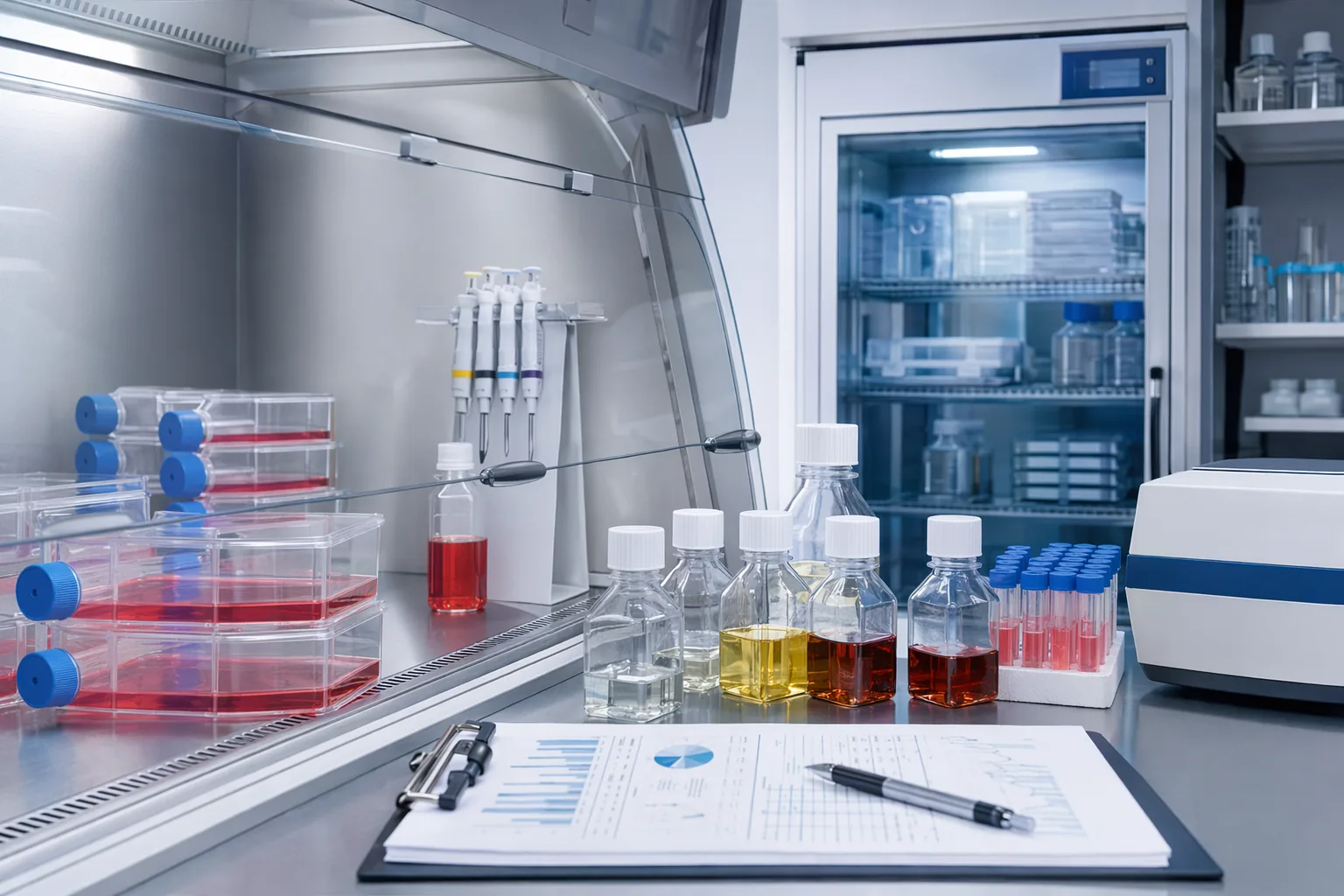
For B2B teams searching “trypsin enzym” guidance, this page summarizes practical dosage, pH, temperature, and QC controls for reliable cell detachment and validated production workflows.
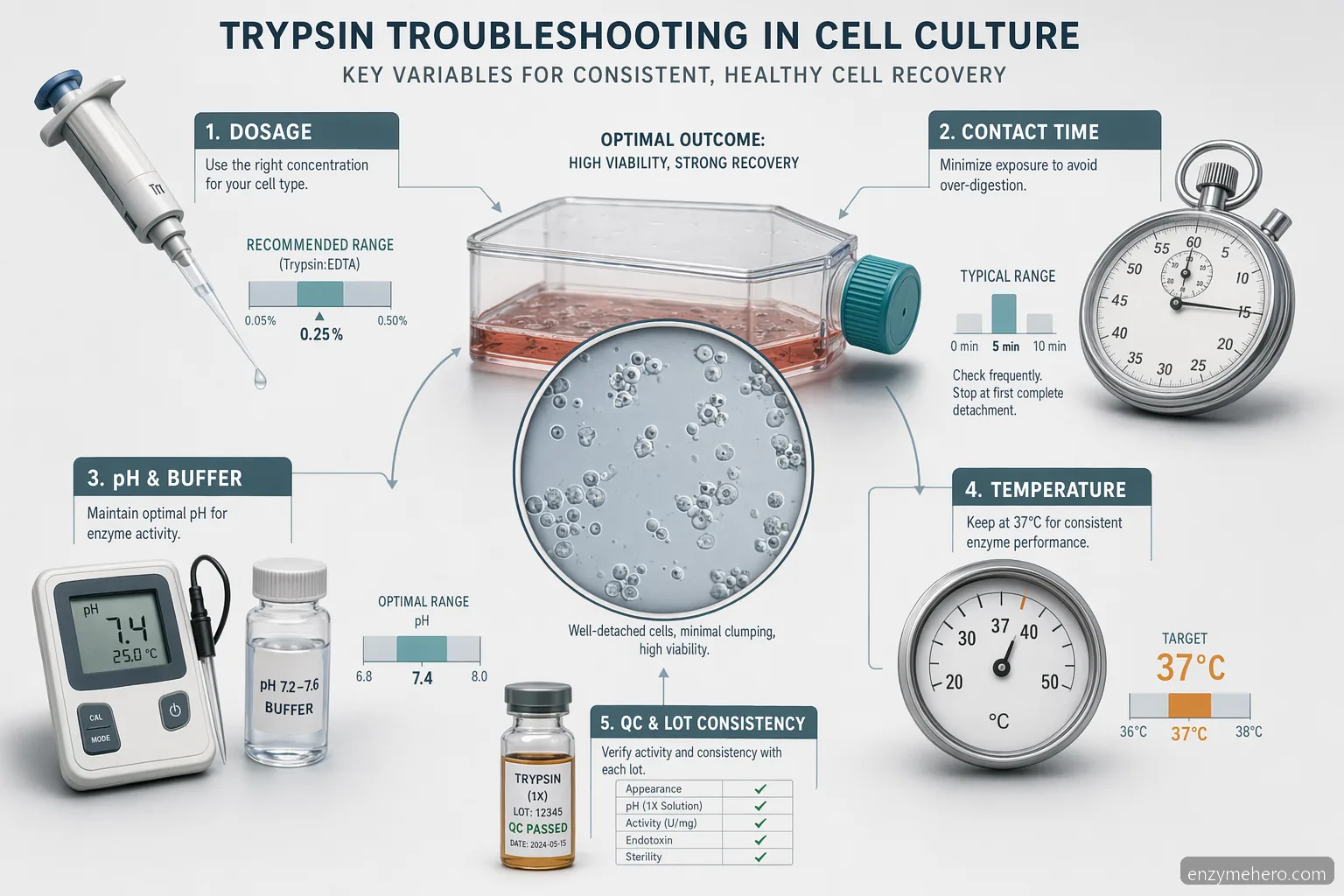
Why trypsin performance varies in cell culture
Trypsin is a serine protease used to cleave adhesion-related proteins so adherent cells can detach from culture surfaces. If detachment is slow, uneven, or damaging, the issue is often not the enzyme name but the process window. Lot activity, concentration, exposure time, residual serum, chelators, pH, and temperature all change the practical enzym trypsin wirkung. In B2B cell culture, the target is not maximum digestion; it is controlled detachment with acceptable viability, morphology, recovery, and downstream performance. A robust purchasing specification should therefore connect the trypsin enzyme grade to the validated protocol, including storage, thawing, dilution, hold time, and neutralization method. For regulated or scale-sensitive workflows, compare recombinant trypsin, porcine-derived trypsin, and trypsin-EDTA formats through the same pilot matrix rather than assuming equivalent performance by label concentration alone.
Define the cell line, surface, vessel scale, and passaging frequency. • Track detachment time, cell viability, clumping, and post-passage recovery. • Confirm whether EDTA is required to improve detachment consistency.
Dosage bands and contact time
For cell culture detachment, trypsin is commonly evaluated from 0.025% to 0.25% w/v, with 0.05% trypsin-EDTA often used as a starting point for many adherent lines. Sensitive cells may require lower concentration, shorter contact, or a recombinant dissociation reagent, while strongly adherent cells may need longer exposure or EDTA support. Typical contact times range from about 1 to 10 minutes, but the correct endpoint is visual and analytical: cells round up, detach with gentle tapping, and retain acceptable viability after neutralization. Overexposure can reduce surface proteins, viability, and recovery; underexposure can increase scraping, clumping, and variable seeding density. During qualification, run a small design of experiments using enzyme concentration, temperature, and time as factors, then select the lowest effective dose that meets yield and quality targets.
Start with the supplier TDS range, then validate by cell line. • Use consistent wash steps to remove serum before trypsinization. • Neutralize promptly using validated medium, serum, or inhibitor strategy. • Calculate cost-in-use by units consumed per successful passage, not bottle price.
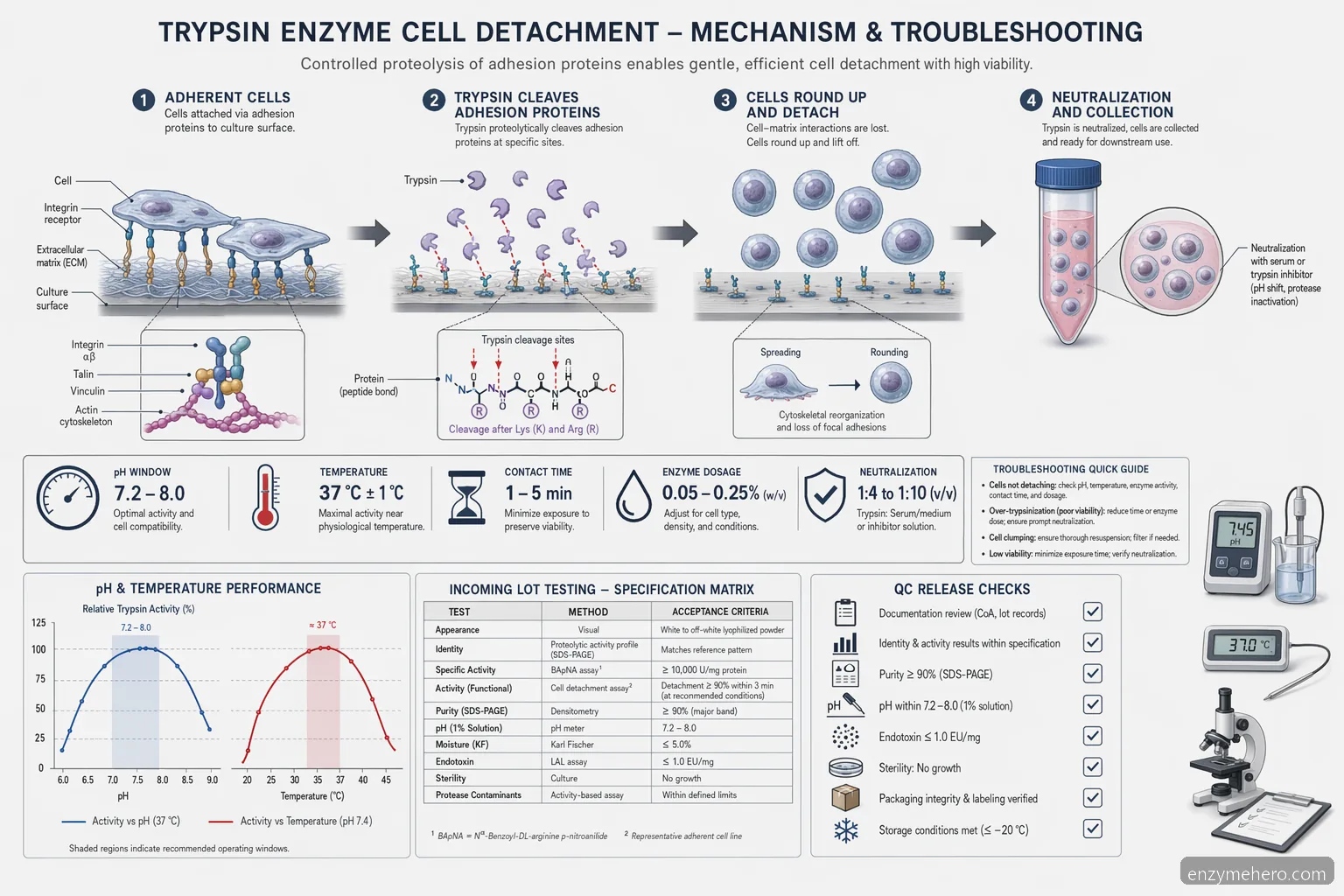
pH, temperature, and buffer controls
The trypsin enzym funktion is strongly affected by pH and temperature. Many trypsin preparations show useful activity near neutral to mildly alkaline conditions, commonly around pH 7.5–8.5, although the supplier specification should be followed for the exact product. In cell culture, 37°C is typically used to support rapid detachment, while room temperature slows activity and cold conditions can substantially reduce digestion rate. Buffer composition also matters. Residual serum contains protease inhibitors that reduce activity, while calcium and magnesium can influence cell adhesion and chelator performance. Avoid unnecessary delays after warming diluted enzyme, because activity and microbial risk can change with hold time. Record actual vessel temperature, not only incubator setpoint, especially in multilayer vessels, microcarriers, or closed systems where heat transfer is slower.
Verify working pH after dilution, not only concentrate pH. • Keep exposure time consistent between small scale and scale-up. • Document maximum room-temperature and 37°C hold times.
QC checks for incoming lots and process release
A qualified trypsin enzyme supply program should use both document review and functional testing. At minimum, request the COA, TDS, and SDS for each material. The COA should state activity or potency method, appearance, concentration, storage conditions, expiration or retest date, and applicable microbiological or impurity attributes for the intended use. For recombinant trypsin, buyers may also request relevant information on host system, animal-origin status, residual host cell protein or DNA controls when applicable, and lot traceability. Internal QC should include a side-by-side detachment assay against the approved reference lot, plus viability, recovery, morphology, and passage-performance checks. If a trypsin inhibitor enzym strategy is used, qualify inhibitor concentration and timing as part of the same assay so residual protease activity does not carry into downstream culture or diagnostics workflows.
Retain a reference lot for bridging new supplier lots. • Set acceptance criteria before pilot validation begins. • Trend detachment time and viability across lots.
Supplier qualification and scale-up decisions
Industrial buyers should evaluate trypsin as a process input, not a commodity. Supplier qualification should cover manufacturing consistency, change notification practices, documentation quality, packaging configuration, storage and shipping controls, lead time, and technical support responsiveness. A low unit price can become expensive if activity variability increases labor time, failed passages, or downstream assay noise. Build a cost-in-use model that includes dilution factor, units per batch, operator time, waste, retesting, yield loss, and inventory risk. Before switching from native to recombinant trypsin, or from one concentration to another, complete pilot validation at representative scale and surface area. Confirm that the enzyme performs under real conditions, including thaw cycles, closed transfer steps, neutralization, and any diagnostic or protein digestion compatibility requirements.
Compare suppliers using matched protocols and blinded lot testing. • Require COA/TDS/SDS review before purchase approval. • Include logistics, shelf life, and packaging waste in total cost.
Technical Buying Checklist
Buyer Questions
Yes. The answer to “is trypsin an enzyme” is yes: trypsin is a proteolytic enzyme used to cleave peptide bonds in proteins. In cell culture, its practical role is controlled detachment of adherent cells. Troubleshooting should focus on concentration, pH, temperature, exposure time, residual serum, neutralization, and lot activity rather than using a higher dose by default.
Weak trypsin enzym wirkung can come from low activity, expired or mishandled material, cold reagent, incorrect pH, residual serum after washing, inadequate EDTA, or a cell line that is strongly adherent. Check the COA activity, storage history, working dilution, and actual contact temperature. Then run a small pilot matrix to separate enzyme quality issues from protocol conditions.
Recombinant trypsin is often considered when a workflow needs animal-origin-free sourcing, tighter traceability, or reduced dependence on animal-derived raw materials. It is not automatically interchangeable with native trypsin at the same label concentration. Buyers should compare detachment time, viability, morphology, downstream performance, documentation, cost-in-use, and supplier qualification data before approving a switch.
If a trypsin inhibitor enzym step is used, validate both dose and timing. The inhibitor should stop residual protease activity without creating toxicity, assay interference, or carryover problems. Test inhibitor concentration alongside trypsin concentration and contact time, then measure viability, recovery, morphology, and downstream assay performance. Document the accepted range in the batch record or process SOP.
Trypsin for Research & Industry
Need Trypsin for your lab or production process?
ISO 9001 certified · Food-grade & research-grade · Ships to 80+ countries
Frequently Asked Questions
Is trypsin an enzyme used for cell culture troubleshooting?
Yes. The answer to “is trypsin an enzyme” is yes: trypsin is a proteolytic enzyme used to cleave peptide bonds in proteins. In cell culture, its practical role is controlled detachment of adherent cells. Troubleshooting should focus on concentration, pH, temperature, exposure time, residual serum, neutralization, and lot activity rather than using a higher dose by default.
What causes weak trypsin enzym wirkung during passaging?
Weak trypsin enzym wirkung can come from low activity, expired or mishandled material, cold reagent, incorrect pH, residual serum after washing, inadequate EDTA, or a cell line that is strongly adherent. Check the COA activity, storage history, working dilution, and actual contact temperature. Then run a small pilot matrix to separate enzyme quality issues from protocol conditions.
When should a buyer consider recombinant trypsin?
Recombinant trypsin is often considered when a workflow needs animal-origin-free sourcing, tighter traceability, or reduced dependence on animal-derived raw materials. It is not automatically interchangeable with native trypsin at the same label concentration. Buyers should compare detachment time, viability, morphology, downstream performance, documentation, cost-in-use, and supplier qualification data before approving a switch.
How should trypsin inhibitor enzym controls be validated?
If a trypsin inhibitor enzym step is used, validate both dose and timing. The inhibitor should stop residual protease activity without creating toxicity, assay interference, or carryover problems. Test inhibitor concentration alongside trypsin concentration and contact time, then measure viability, recovery, morphology, and downstream assay performance. Document the accepted range in the batch record or process SOP.
Related: Trypsin Enzyme for Reliable Cell Harvesting
Turn This Guide Into a Supplier Brief Request a trypsin enzyme specification review, sample plan, and pilot validation support for your cell culture workflow. See our application page for Trypsin Enzyme for Reliable Cell Harvesting at /applications/trypsin-enzyme-substrate/ for specs, MOQ, and a free 50 g sample.
Contact Us to Contribute