Trypsin Enzyme Mediated Hydrolysis for Protein Hydrolysate Producers
For protein hydrolysate producers: where trypsin fits in a controlled enzymatic hydrolysis, the process steps, failure cases of uncontrolled fermentation, QC checks, COA/TDS/SDS review, pilot validation, and cost-in-use guidance.
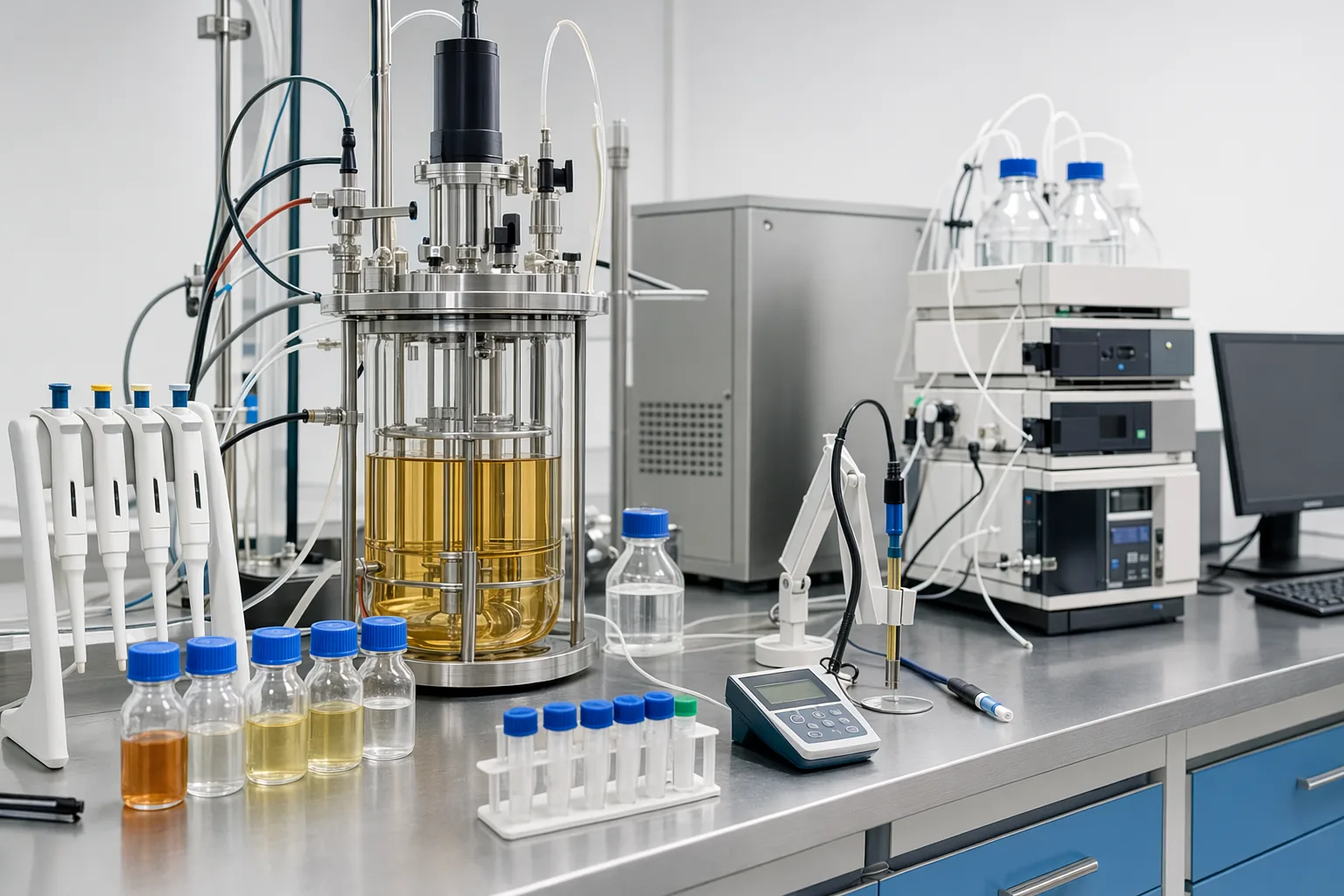
Protein by-products only earn money as a hydrolysate when the hydrolysis is controlled. Left to natural fermentation, fish and other protein scraps break down slowly and unevenly, smell, spoil a second time and give a liquid whose amino acid content is low and unpredictable. A directed enzymatic step with a protease system that can include trypsin turns the same raw material into small peptides and free amino acids within hours, under set pH and time, with a heat stop and a test at the end. This page is for feed, fertilizer and ingredient producers who make or buy protein hydrolysates and want a process they can repeat batch after batch; it ends with what to send for a quote.
The Problem: Uncontrolled Fermentation of Protein Scraps
Short videos promote a cheap shortcut: chop dead fish or processing scraps, add brown sugar, seal and wait about ten days, and call the liquid a natural fish-protein fertilizer or feed additive. The appeal is the price, and it draws small producers who want low cost and high return.
The shortcut fails in predictable ways. There is no sterile control, so harmful bacteria such as E. coli and Salmonella can grow. Natural flora cannot hold pH, temperature or oxygen, so a run typically takes 30-90 days, the protein may not break down completely, and the tank can give off large amounts of foul gas such as hydrogen sulfide and ammonia. The amino acid balance drifts, the useful nutrient content stays low, and the liquid is prone to a second spoilage that turns it black and rotten. Its free amino acids are low in total and mostly non-essential, while an enzymatic product is rich in functional amino acids such as glutamic acid and lysine.
Cheap raw fish adds a second risk. Market discards and culled farmed fish can carry heavy metals such as lead, cadmium, mercury and arsenic, plus antibiotic residues, and fermentation does not remove them. In the field, a half-broken liquid still holds large undegraded protein and fat, and applied to soil it can burn roots and invite root rot.
The Controlled Route: Directed Enzymatic Hydrolysis
Industrial producers run directed enzymatic hydrolysis instead: a controlled, standardised biological process rather than open fermentation. The line has five steps.
• Pre-treatment: wash, remove foreign matter, mince, and sterilise at 95 °C for 15 minutes.
• Hydrolysis: add the protease system (for example alkaline protease, flavour protease and trypsin) and hold pH 7.0-8.5 for 4-6 hours at a controlled temperature.
• Enzyme stop: raise the batch to 90 °C and hold 10 minutes to end enzyme activity.
• Recovery: plate-and-frame filtration, ultrafiltration for desalting, then spray drying.
• Release testing: amino acid profile, heavy metals, microbial counts and solubility.
Run this way, the process reaches a high degree of hydrolysis and yields a large share of small peptides and free amino acids, which plants take up easily when the hydrolysate goes into fertilizer.
Where Trypsin Fits in the Protease System
In this kind of line trypsin is one member of a protease system, used alongside alkaline protease and flavour protease rather than alone. Trypsin cuts protein chains on the carboxyl side of lysine and arginine, so it gives a defined cleavage pattern, while the broader proteases open the rest of the chain; the blend ratio is set in pilot trials on your own raw material. The pH window of the described process, 7.0-8.5, sits inside the 7.0-9.0 range given for the trypsin on this site.
Fermentation Shortcut vs Controlled Enzymatic Hydrolysis
• Time: natural fermentation runs 30-90 days; the enzymatic reaction step runs 4-6 hours.
• Control: fermentation cannot hold pH, temperature or oxygen; the enzymatic line holds pH 7.0-8.5 and a set temperature.
• Hygiene: fermentation has no sterile control; the enzymatic line sterilises the raw material at 95 °C for 15 minutes before hydrolysis.
• Stop: fermentation has no defined end and can spoil a second time; the enzymatic line ends with 90 °C for 10 minutes.
• Product: fermentation gives low, mostly non-essential free amino acids; the enzymatic line gives small peptides and free amino acids rich in glutamic acid and lysine.
• Raw material: fermentation often uses market discards that may carry heavy metals and drug residues; the enzymatic line starts from fresh marine by-products such as cod, anchovy or sardine trimmings, or offcuts from certified farms, checked for drug residues and heavy metals.
Troubleshooting Checklist Before You Scale Up
• Raw material: use fresh by-products with no drug residues and heavy metals within food limits; stale or discarded fish brings in residues no enzyme can remove.
• Pre-treatment: wash, remove foreign matter and mince before the enzyme goes in, then sterilise at 95 °C for 15 minutes so the hydrolysis does not turn into a fermentation.
• pH: hold 7.0-8.5 through the reaction instead of letting it drift.
• Time: end the reaction after 4-6 hours; a tank left for weeks is fermentation, not hydrolysis.
• Stop: heat to 90 °C for 10 minutes so the enzyme does not keep working in storage.
• Recovery: filter, ultrafilter to desalt and spray dry for a stable powder.
• Release: test amino acid profile, heavy metals, microbes and solubility on every batch.
Documents to request before a pilot order:
• Review lot-specific activity on the COA.
• Use activity units from the COA, not only grams added.
• Request a current COA for activity, appearance, purity-related tests, and microbiological attributes appropriate to the grade.
• Review the TDS for recommended pH, temperature, storage, solubility, and handling conditions.
• Review the SDS for safe handling, respiratory sensitization precautions, spill response, and storage controls.
• Request COA, TDS, and SDS before pilot purchase.
• Buyers should still review the COA, TDS, SDS, expression system information where available, activity definition, impurity profile, and pilot data before replacing an existing trypsin enzyme source.
Cost: Why the Cheap Route Is Not Cheaper
Home-made fish liquid is promoted at a fraction of the price of an industrial hydrolysate. The higher price of the enzymatic product rests on safety, stability and a product that works the same way every batch. The real saving is not made by cutting corners on raw-material safety; it comes from a controlled input that gives a predictable output.
Trypsin for Research & Industry
Need Trypsin for your lab or production process?
ISO 9001 certified · Food-grade & research-grade · Ships to 80+ countries
Frequently Asked Questions
Why not ferment protein scraps without enzymes?
Natural fermentation typically takes 30-90 days, cannot hold pH, temperature or oxygen, can grow harmful bacteria, gives off foul gases such as hydrogen sulfide and ammonia, and leaves a liquid low in free amino acids that can spoil a second time.
What pH and reaction time does the controlled hydrolysis use?
The described enzymatic line holds pH 7.0-8.5 for a 4-6 hour reaction with a protease system that can include trypsin. Confirm the window for your raw material in a pilot run.
How is the enzyme stopped at the end of hydrolysis?
The batch is heated to 90 °C and held for 10 minutes to end enzyme activity, before filtration, ultrafiltration and spray drying.
Which QC tests should a hydrolysate producer run?
Amino acid profile, heavy metals, microbial counts and solubility on each batch, plus checks on the raw material for drug residues and heavy metals before it enters the line.
What should a quote request include?
The product (trypsin grade and source), the quantity, the destination country, and the substrate and batch size of your hydrolysis line, so grade fit can be confirmed before quoting.
Request a Trypsin Quote
To get a quote, send the product (grade and source), the quantity and the destination country. Turn this guide into a supplier brief: request trypsin specifications, pilot samples, and cost-in-use support for your hydrolysis process. See our application page for Trypsin Enzyme for Reliable Cell Harvesting for specs, MOQ, and a free 50 g sample.
Contact Us to Contributehello@mail.enzymehero.com