Trypsin Enzyme for Cell Culture: Process Guide
Source trypsin enzyme for cell culture with process conditions, QC checks, recombinant options, COA/TDS/SDS review, and cost-in-use guidance.
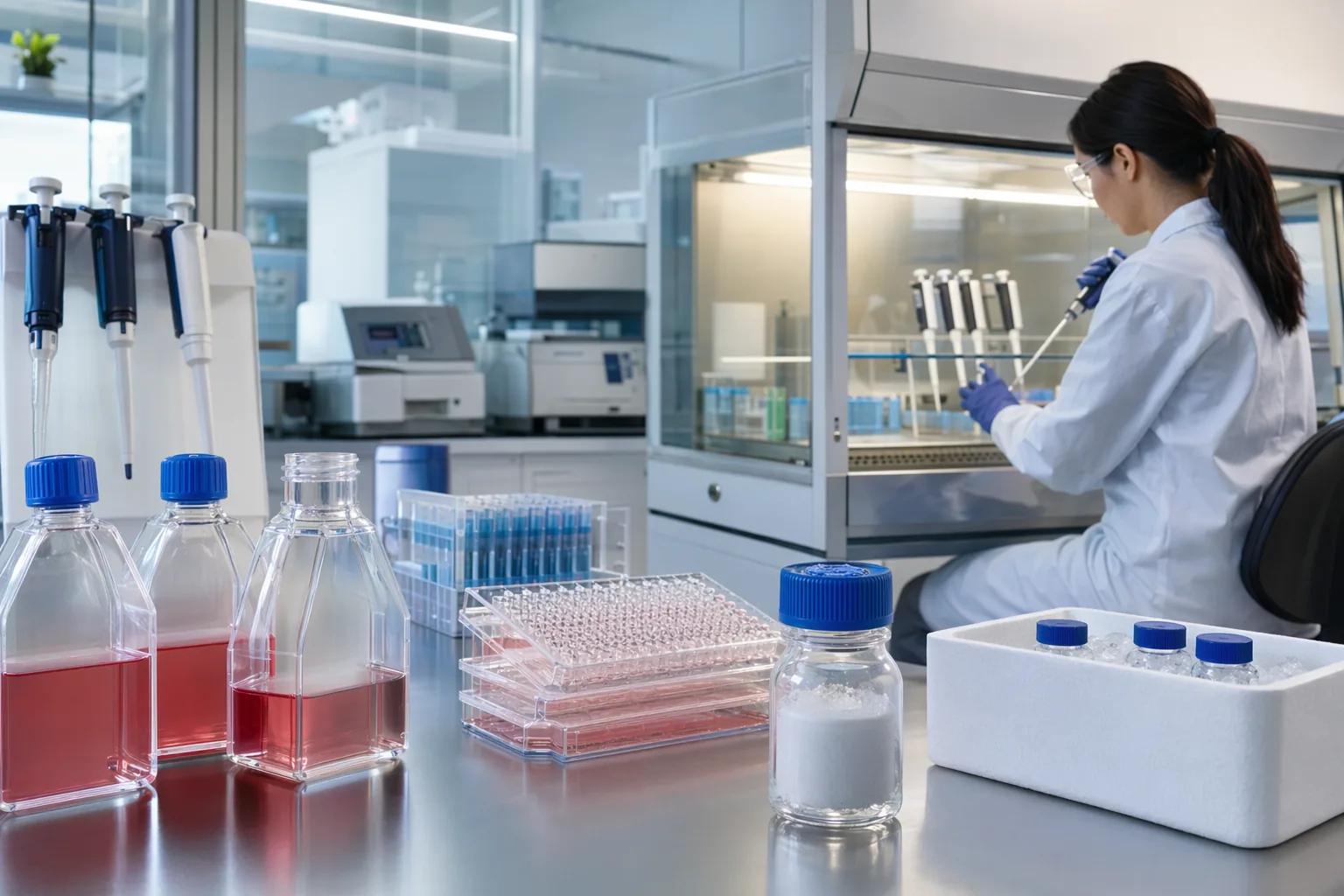
A practical B2B guide to selecting, validating, and controlling trypsin for adherent cell dissociation in research, bioprocess, and diagnostic workflows.
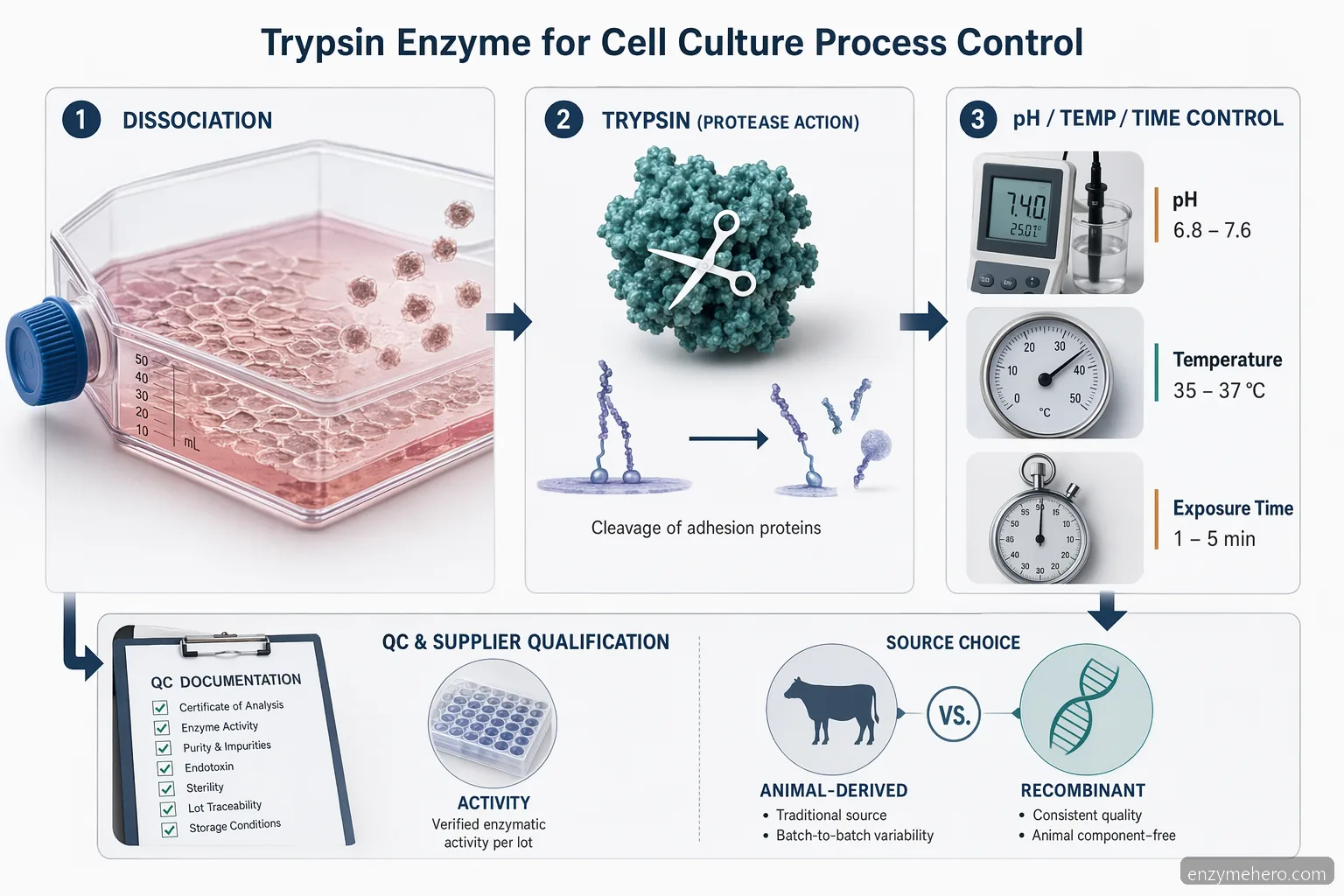
Why trypsin is used in adherent cell culture
Trypsin enzyme is a serine protease widely used to passage adherent mammalian cells. Its function in cell culture is to cleave proteins that support attachment, including extracellular matrix components and selected cell-surface adhesion proteins. This controlled proteolysis allows cells to round up and detach without harsh mechanical scraping. For buyers asking, “is trypsin an enzyme,” the answer is yes: it belongs to the broader class of proteolytic enzymes, trypsin being one of the most common for routine cell dissociation. In biological systems, trypsin is produced from trypsinogen, mainly associated with pancreatic secretion and intestinal protein digestion. In industrial and laboratory supply chains, however, the relevant question is not physiology but consistency: activity, origin, purity, microbial control, documentation, and fit with the target cell line. For B2B procurement, the right trypsin format can reduce passage variability and protect downstream assays.
Primary application: adherent cell detachment and subculture • Common formats: trypsin solution, trypsin-EDTA, powdered trypsin, recombinant trypsin • Critical outcome measures: detachment time, viability, morphology, and recovery
Process conditions for trypsin cell culture use
For trypsin cell culture workflows, process control matters more than using the highest activity material. Common working concentrations include 0.025-0.25% w/v trypsin, often paired with EDTA in the approximate 0.02-0.53 mM range to help chelate calcium and magnesium and weaken adhesion. Many mammalian cell lines are detached at pH 7.2-8.0 and 20-37 °C, with 37 °C commonly used for faster action. Contact time is typically 1-10 minutes, but should be minimized and validated for each cell type. Overexposure may reduce viability, affect surface markers, or alter downstream assay performance. After detachment, the enzyme trypsin is usually neutralized with serum-containing medium or a defined trypsin inhibitor, depending on the process. A robust standard operating procedure should define rinse steps, volume-to-surface-area ratio, incubation conditions, observation criteria, and neutralization timing.
Validate exposure time by cell line and vessel format • Avoid dry monolayers before enzyme addition • Confirm complete neutralization or removal before downstream processing • Track passage number when assessing trypsin impact
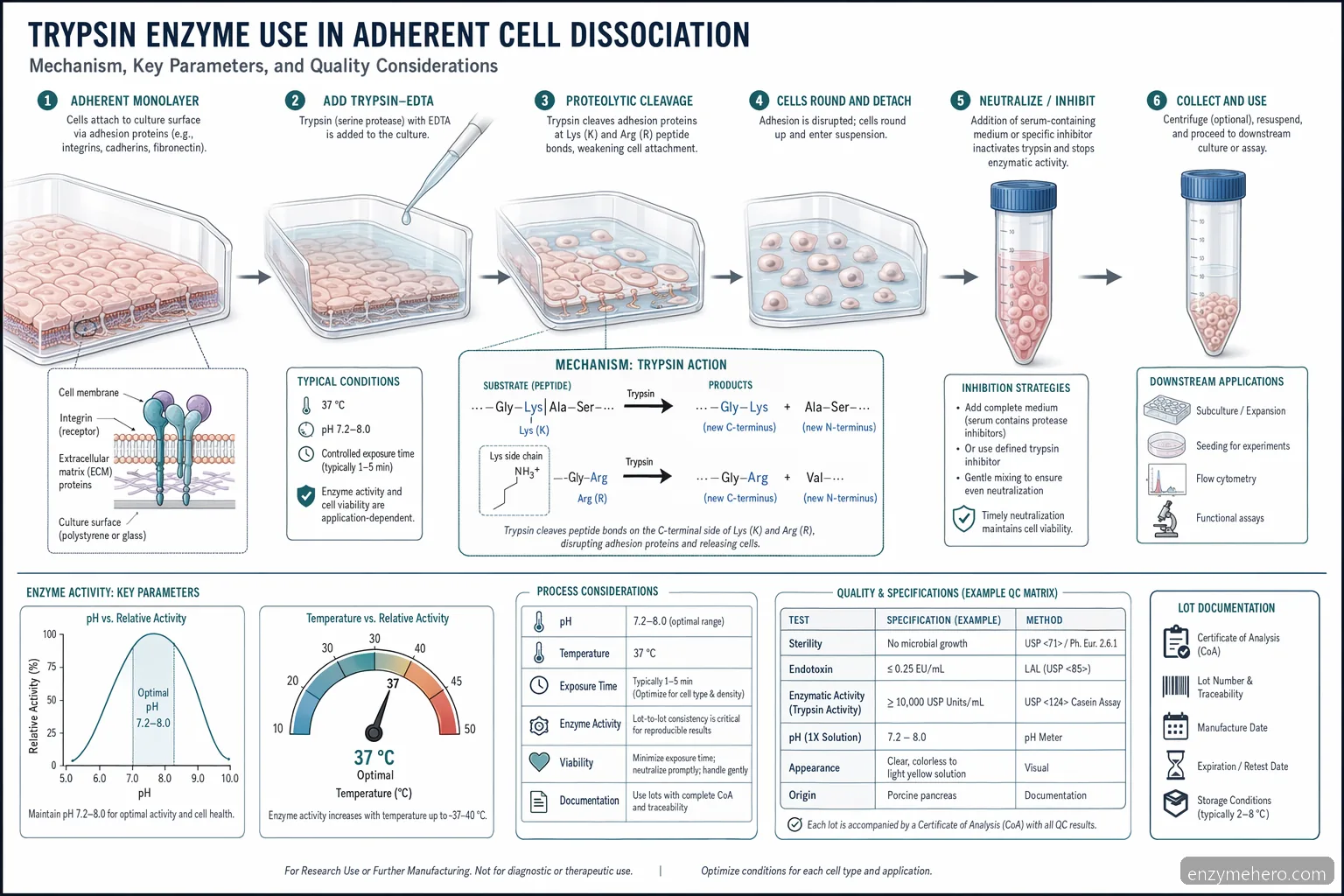
Substrate specificity and enzyme activity
The trypsin enzyme substrate profile is central to both performance and risk control. Trypsin preferentially cleaves peptide bonds on the carboxyl side of lysine and arginine residues, except where steric context, such as adjacent proline, limits cleavage. This specificity makes trypsin valuable not only in cell culture but also in protein digestion workflows used for analytical sample preparation. In cell dissociation, the same proteolytic activity must be controlled so adhesion proteins are sufficiently digested while essential cell features are preserved. Activity units are not always interchangeable between suppliers because assays, substrates, and reporting conventions can differ. Buyers should review the TDS and COA to understand the activity method, acceptance range, formulation, stabilizers, and recommended storage. When comparing products, normalize on working dilution, detachment time, viability, and lot-to-lot reproducibility rather than nominal concentration alone.
Key cleavage preference: after lysine and arginine residues • Activity assay methods may vary by supplier • Performance should be compared under the intended process conditions
Animal-derived versus recombinant trypsin
Traditional trypsin is commonly sourced from porcine or bovine pancreas, while recombinant trypsin is produced using controlled expression systems and can support animal-origin-free process objectives when appropriately documented. The best choice depends on cell sensitivity, regulatory expectations, process history, and risk tolerance. Animal-derived trypsin can be cost-effective and familiar in many research settings, but buyers should evaluate origin, traceability, viral risk controls, and impurity profile. Recombinant trypsin may offer improved supply-chain definition and reduced animal-origin concerns, but it still requires practical validation against the existing process. For diagnostics, cell therapy support workflows, and defined media systems, procurement teams often prioritize recombinant or highly characterized options. Supplier claims should be verified through documentation rather than assumed from product names. Request COA, TDS, SDS, origin statement, formulation details, storage requirements, and change notification practices before approval.
Animal-derived trypsin may suit established cost-sensitive workflows • Recombinant trypsin can support defined or animal-origin-free strategies • Always validate equivalence before replacing an approved material
QC checks, documentation, and supplier qualification
A qualified trypsin enzyme supplier should provide documentation that supports both purchasing and technical release. At minimum, request a certificate of analysis, technical data sheet, and safety data sheet for the exact grade and lot. Useful COA attributes may include activity, appearance, pH, sterility or bioburden, endotoxin where relevant, mycoplasma testing for cell culture grades, and storage conditions. The TDS should clarify formulation, recommended dilution, stability, and handling. Supplier qualification should also review manufacturing consistency, lot reservation options, lead time, packaging integrity, cold-chain requirements, change notification, and complaint handling. Avoid relying only on price per bottle; inconsistent activity can increase labor, failed passages, or assay variability. For regulated or high-value workflows, define incoming QC checks such as small-scale detachment testing, viability measurement, morphology review, and confirmation that no unexpected cytotoxicity appears after passage.
Review COA, TDS, and SDS before procurement approval • Set incoming acceptance criteria for critical lots • Document supplier changes and revalidation results • Confirm storage and shipping temperature requirements
Pilot validation and cost-in-use
Pilot validation should translate supplier specifications into process economics. Compare candidate trypsin materials using the same cell line, seeding density, confluence, vessel type, rinse protocol, temperature, and neutralization method. Record detachment time, clumping, cell yield, viability, morphology after reseeding, growth rate, and downstream assay performance. If the workflow feeds diagnostics or analytical protein digestion, include any relevant compatibility checks for buffers, inhibitors, and residual protease. Cost-in-use should include dilution factor, working volume, waste, thaw stability, labor time, repeat passages, failed batch risk, shipping, storage, and documentation burden. A product with a higher purchase price can be economical if it shortens handling time or improves consistency. Before scale-up, run at least one side-by-side lot comparison and define the action plan for future lot changes. This approach supports better supplier qualification and more predictable cell culture operations.
Compare candidates under identical process conditions • Measure both immediate detachment and post-passage recovery • Calculate cost per successful passage, not only cost per unit • Retain pilot data for future supplier or lot-change decisions
Technical Buying Checklist
Buyer Questions
Yes. Trypsin is an enzyme, specifically a serine protease. In cell culture, the enzyme trypsin digests adhesion-related proteins so adherent cells can detach from the culture surface. In the body, it participates in protein digestion, but industrial buyers usually evaluate it by activity, origin, purity, formulation, microbial control, documentation, and process consistency.
The function of trypsin enzyme in cell culture is controlled proteolysis of proteins involved in cell attachment. This helps adherent cells round up and release from flasks, plates, or microcarriers. The process must be timed carefully because excessive exposure can reduce viability, alter surface markers, or affect downstream assays. Each cell line should have a validated contact time and neutralization step.
The trypsin enzyme substrate is protein or peptide material containing cleavage sites after lysine or arginine residues, although neighboring sequence context can affect cleavage. In cell culture, relevant substrates include adhesion proteins and extracellular matrix components. In protein digestion workflows, this specificity is useful for generating predictable peptides for analytical methods, provided digestion conditions are controlled.
Trypsin enzyme is naturally associated with pancreatic production as the inactive precursor trypsinogen, which becomes active trypsin in the small intestine for protein digestion. Commercial trypsin for cell culture may be animal-derived, commonly from pancreas, or produced as recombinant trypsin. For procurement, source, traceability, activity, and QC documentation are more important than the physiological origin alone.
Enteropeptidase, historically called enterokinase, converts trypsinogen to trypsin in the intestine. Trypsin can also activate additional trypsinogen once the reaction has started. This biology is useful background, but cell culture buyers should focus on the supplied active enzyme preparation, its activity assay, formulation, storage requirements, and suitability for the intended cell line.
A trypsin enzyme activity kit can support incoming QC or comparative evaluation, but results must be interpreted against the kit method and substrate. Activity data should be paired with functional cell culture tests such as detachment time, viability, morphology, and recovery. For supplier qualification, request the lot COA and confirm that internal activity results align with process performance.
Trypsin for Research & Industry
Need Trypsin for your lab or production process?
ISO 9001 certified · Food-grade & research-grade · Ships to 80+ countries
Frequently Asked Questions
Is trypsin an enzyme?
Yes. Trypsin is an enzyme, specifically a serine protease. In cell culture, the enzyme trypsin digests adhesion-related proteins so adherent cells can detach from the culture surface. In the body, it participates in protein digestion, but industrial buyers usually evaluate it by activity, origin, purity, formulation, microbial control, documentation, and process consistency.
What is the function of trypsin enzyme in cell culture?
The function of trypsin enzyme in cell culture is controlled proteolysis of proteins involved in cell attachment. This helps adherent cells round up and release from flasks, plates, or microcarriers. The process must be timed carefully because excessive exposure can reduce viability, alter surface markers, or affect downstream assays. Each cell line should have a validated contact time and neutralization step.
What is the trypsin enzyme substrate?
The trypsin enzyme substrate is protein or peptide material containing cleavage sites after lysine or arginine residues, although neighboring sequence context can affect cleavage. In cell culture, relevant substrates include adhesion proteins and extracellular matrix components. In protein digestion workflows, this specificity is useful for generating predictable peptides for analytical methods, provided digestion conditions are controlled.
Where is trypsin enzyme found?
Trypsin enzyme is naturally associated with pancreatic production as the inactive precursor trypsinogen, which becomes active trypsin in the small intestine for protein digestion. Commercial trypsin for cell culture may be animal-derived, commonly from pancreas, or produced as recombinant trypsin. For procurement, source, traceability, activity, and QC documentation are more important than the physiological origin alone.
Which enzyme converts trypsinogen to trypsin?
Enteropeptidase, historically called enterokinase, converts trypsinogen to trypsin in the intestine. Trypsin can also activate additional trypsinogen once the reaction has started. This biology is useful background, but cell culture buyers should focus on the supplied active enzyme preparation, its activity assay, formulation, storage requirements, and suitability for the intended cell line.
How should a trypsin enzyme activity kit be used in procurement?
A trypsin enzyme activity kit can support incoming QC or comparative evaluation, but results must be interpreted against the kit method and substrate. Activity data should be paired with functional cell culture tests such as detachment time, viability, morphology, and recovery. For supplier qualification, request the lot COA and confirm that internal activity results align with process performance.
Related: Trypsin Enzyme for Reliable Cell Harvesting
Turn This Guide Into a Supplier Brief Request trypsin specifications, samples, and pilot-validation support for your cell culture process. See our application page for Trypsin Enzyme for Reliable Cell Harvesting at /applications/trypsin-enzyme-substrate/ for specs, MOQ, and a free 50 g sample.
Contact Us to Contribute